


Country Info | Read more

Flags are sourced from free platforms like flagpedia.net
China
China is a massive country where the very old meets the super new. You can hike along the famous Great Wall, then take a fast train through the bright lights of Shanghai. The local food is amazing, and there is always something completely unique to see.
* Affiliate links are marked with an asterisk (*). We may earn a commission at no extra cost to you.
Photos without credits are sourced from free platforms like Unsplash and Pexels



Did you know?
Great Wall of China – Northern China is home to the iconic Great Wall, the world’s longest man-made structure, spanning over 13,000 miles.
Overview
Months
April, August, December, February, January, July, June, March, May, November, October, September
Vacation type
Beach, Couple, Family, Mountains, Party, Rainforest, Safari, Skiing
Expenses
0-50€, <100€, <150€, <200€, Over 200€
Temperature
Under 0°C, 0-10°C, 10-20°C, 20-25°C, 25-30°C
Rainfall
0-50mm, 50-100mm, 100-150mm, 150-200mm, >200mm
Safety
Safe
Continent
Asia
Currency
Yuan
Languages
Mandarin
Currency Converter
When to visit
China has many different climates. For the most accurate information, each region has its own dedicated page.
Climatic conditions across China exhibit significant regional variations due to the vast continental landmass. Travelers generally find the most suitable conditions during the spring (April to May) and autumn (September to October) transitional seasons. During these intervals, temperatures remain moderate across most provinces, avoiding the intense summer heat and severe winter cold that characterize the northern and central plains.
Major domestic travel fluctuations heavily influence logistics. The first weeks of May and October (Golden Week holidays) produce maximum capacity crowds at all transit hubs and cultural sites, necessitating advanced planning and yielding peak pricing.
The Lunar New Year (occurring between late January and mid-February) triggers the largest annual human migration globally, severely disrupting intercity transit availability while causing widespread closures of retail and restaurant establishments.
-
Plan the whole vacation, including flights, transportation, hotels and tours with Expedia *

Climate Data
Peak Season (April to May; September to October)
Average Sunny Hours per Day: 6 to 8 hours
Rain Frequency: Moderate in the south, low in the north.
Rainy Hours per Day: 1 to 2 hours
Intensity: Generally light to moderate precipitation.
Duration: Brief weather systems that rarely impact prolonged outdoor activity.
Off-Peak Season (June to August; November to March)
Average Sunny Hours per Day: 4 to 6 hours
Rain Frequency: High concentration of annual rainfall in summer; arid winter conditions with snowfall in northern latitudes.
Rainy Hours per Day: 2 to 4 hours (summer).
Intensity: Heavy summer convective storms; freezing winter temperatures dropping below -20°C in the northeast.
Duration: Summer storms can persist for days, occasionally developing into cyclonic events along the eastern seaboard.
Climate Chart
_edited_edited_edited_e.jpg)
Data Source: Global Historical Climatology Network
ClimateCharts.net
Weather, Crowds and Costs
Per one person
Tourist Season: April-May / September-October
1. Basic / Essential Travel ($50-90/day)
Accommodation: $20-40/night (clean, reliable youth hostels or budget domestic hotel chains like Home Inn).
Food: $10-20/day (abundant, phenomenal street food, noodle shops, and neighborhood dumpling houses).
Activities: $10-15/day (temple entry fees, public parks, basic museum tickets).
Transportation: $5-10/day (extensive, ultra-modern subway systems and local buses).
Other Costs: $5/day (bottled water, snacks).
2. Mid-Range Travel ($130-250/day)
Accommodation: $60-120/night (comfortable 3- to 4-star boutique hotels or modern business hotels).
Food: $30-50/day (sit-down meals at popular regional restaurants, specialty hot pot).
Activities: $20-40/day (Great Wall entry and cable cars, comprehensive heritage site tickets).
Transportation: $10-20/day (DiDi ride-hailing apps and occasional short-distance high-speed rail tickets).
Other Costs: $10-20/day (premium coffee, VPN subscriptions).
3. Luxury / Premium Travel ($450 - $800+/day)
Accommodation: $200-400+/night (5-star international luxury brands like Peninsula, Mandarin Oriental, or historic courtyard hotels in Beijing).
Food: $100-200+/day (Michelin-starred dining, premium Peking Duck banquets, imported wines).
Activities: $80-150+/day (private bilingual tour guides, exclusive cultural experiences, VIP theater tickets).
Transportation: $50-100+/day (first-class high-speed rail tickets, private chauffeured vehicles).
Other Costs: $20+/day (premium gratuities for specialized guides, high-end incidentals).
Off-Peak Season: November-March / June-August
1. Basic / Essential Travel ($40-75/day)
Accommodation: $15-30/night.
Food: $10-20/day.
Activities: $10-15/day.
Transportation: $5-10/day.
Other Costs: $5/day.
2. Mid-Range Travel ($100-200/day)
Accommodation: $50-90/night.
Food: $25-45/day.
Activities: $15-35/day.
Transportation: $10-20/day.
Other Costs: $10/day.
3. Luxury / Premium Travel ($350 - $650+/day)
Accommodation: $150-300+/night.
Food: $80-150/day.
Activities: $80-120/day.
Transportation: $50-80/day.
Other Costs: $20/day.
-
You can find accomendations that fit your trip and budget on Booking.com, Vrbo and Hotels.com


Best Regions to visit
Cities
1. Beijing
- The political and cultural heart of China. It is a city of massive scale and historical gravity, defined by sweeping boulevards, the imposing Forbidden City, quiet historic hutong alleyways, and proximity to the Great Wall.
2. Shanghai
- China's dazzling financial hub. It presents a stark, beautiful contrast between the colonial-era architecture of the Bund and the futuristic, neon-lit skyline of Pudong across the Huangpu River.
3. Xi'an
- One of the oldest cities in China and the eastern terminus of the Silk Road. It is famous for its perfectly preserved ancient city walls and the staggering archaeological wonder of the Terracotta Army.
4. Chengdu
- The capital of Sichuan province, known for its remarkably relaxed pace of life, traditional teahouses, fiery and numbing cuisine, and serving as the global center for Giant Panda conservation.
Shanghai

Did you know?
Forbidden City – Beijing’s Forbidden City is the world’s largest palace complex, home to 24 emperors over 500 years.
Islands
1. Hainan
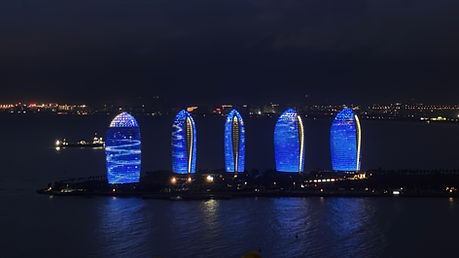
- Often referred to as the "Hawaii of China," this massive southern island province is the country's premier tropical beach destination, featuring luxury resorts, duty-free shopping, and a warm climate year-round.
2. Gulangyu
- A small, picturesque, pedestrian-only island located just off the coast of Xiamen. It is a UNESCO World Heritage site celebrated for its winding alleys, historic colonial-era mansions, and a deep-rooted piano-playing culture.
3. Zhoushan Archipelago
- A large group of islands south of Shanghai, known for Putuoshan (Mount Putuo), one of the four sacred mountains in Chinese Buddhism, featuring ancient temples and massive statues overlooking the sea.
-
Find the perfect place to stay in any of these top cities and islands with Booking.com, Hotels.com and Vrbo – offering entire homes and apartments for a comfortable and private experience.
Hainan
Things to see
Natural Attractions
1. Zhangjiajie National Forest Park
- Located in Hunan province, this surreal landscape of thousands of towering, pillar-like karst sandstone peaks was the visual inspiration for the floating mountains in the film Avatar.
2. The Li River (Guilin to Yangshuo)
- A deeply poetic and classic Chinese landscape. Cruising down the Li River takes you through mist-shrouded limestone karst mountains, bamboo groves, and ancient farming villages.
3. Jiuzhaigou Valley
- A high-altitude nature reserve in northern Sichuan, famous for its multi-tiered waterfalls, snow-capped peaks, and impossibly clear, vibrantly colored lakes that range from deep emerald to bright turquoise.
Historical and Cultural Sites
1. The Great Wall of China
- An awe-inspiring feat of ancient engineering. While sections like Badaling are heavily restored and crowded, sections like Mutianyu offer a better balance of accessibility and scenery, and Jiankou offers wild, rugged hiking.
2. The Forbidden City (Palace Museum)
- The spectacular former imperial palace complex situated in the very center of Beijing. It served as the home of emperors and the ceremonial and political center of the Chinese government for almost 500 years.
3. The Terracotta Army
- Discovered by farmers in 1974 near Xi'an, this staggering collection of thousands of unique, life-sized clay soldiers, horses, and chariots was buried with China's first emperor, Qin Shi Huang, to protect him in the afterlife.
Unique Experiences
1. Riding the High-Speed Rail (CRH)
- Traveling between massive megacities at speeds of up to 350 km/h in total silence and comfort. China's rail network is the largest and most advanced in the world, making domestic flights frequently unnecessary.
2. Sichuan Hot Pot in Chengdu
- Gathering around a boiling, heavily spiced broth filled with numbing Sichuan peppercorns, cooking thinly sliced meats, vegetables, and tofu yourself, accompanied by cold local beer.
3. Walking the Hutongs of Beijing
- Getting lost in the ancient, narrow alleyways of Beijing’s traditional neighborhoods, witnessing daily local life, street vendors, and discovering hidden cocktail bars and boutique cafes.
-
The best way to explore major cities and must-see attractions is by booking guided tours.* They offer convenience, local insights, and often save time when visiting popular sights.
Zhangjiajie

Unique Accomondations/Foodspots
Accommodations
Amanyatun
Location: Summer Palace, Beijing, China
An ultra-luxury cultural retreat discreetly tucked away within a series of historic pavilions that date back to the Ming dynasty, offering direct, private access to the imperial gardens and unmatched tranquility in the capital.
Restaurants / Bars
Da Dong
Location: Chaoyang District, Beijing, China
A world-renowned culinary institution celebrated for inventing modern, low-fat roast Peking duck with crisper skin and delicate presentation, paired with an extensive wine cellar and avant-garde Chinese gastronomy.
Tours to do
1. The Golden Triangle
- The definitive 8-to-10 day introductory itinerary for first-time visitors. Starts in Beijing (Forbidden City, Great Wall), takes the high-speed train to Xi'an (Terracotta Warriors, Muslim Quarter), and finishes in Shanghai (The Bund, Yu Garden).
Best Time: April to May or September to October
Average Cost: $1,500 – $2,500 per person
2. The Sichuan and Yunnan Loop
- A 12-to-14 day deep dive into China's diverse southwest. Starts in Chengdu (Pandas, food), flies to Lijiang (ancient Naxi town), hikes the spectacular Tiger Leaping Gorge, and finishes in the Tibetan-influenced highlands of Shangri-La.
Best Time: May or October
Average Cost: $2,000 – $3,200 per person
Beijing

How to get around
1. High-Speed Rail (CRH)
- The absolute backbone of domestic travel. It is punctual, clean, incredibly fast, and generally affordable. Tickets must be booked in advance via apps like Trip.com using your passport.
2. Domestic Aviation
- Crucial for crossing the massive distances between the east coast and the far west (e.g., Shanghai to Xinjiang or Tibet), served by massive carriers like Air China, China Eastern, and China Southern.
3. Ride-Hailing (DiDi)
- Uber does not operate in China. The domestic equivalent, DiDi, is omnipresent, incredibly cheap, and offers an English interface within its app, making navigating without speaking Mandarin exceptionally easy.
4. Metro Systems
- Every major and secondary city in China boasts a sprawling, ultra-modern, and immaculate subway system. Signage and ticket machines are uniformly bilingual (Mandarin and English).
-
You can find great car rental deals for your vacation on Expedia *
Did you know?
Tea Culture – Southern China is the birthplace of tea culture, where tea has been cultivated for over 2,000 years.
What to eat
1. Peking Duck (Beijing Kaoya)
- The imperial dish of Beijing. Whole ducks are roasted in specialized wood-fired ovens until the skin is intensely crisp. It is sliced tableside and wrapped in thin pancakes with hoisin sauce, cucumber, and spring onions.
2. Xiaolongbao (Soup Dumplings)
- Originating from the Jiangnan region (Shanghai/Suzhou). These delicate, steamed dumplings contain a pork filling and a rich, hot, savory broth inside the wrapper, requiring careful biting to avoid burning your mouth.
3. Mapo Tofu
- A cornerstone of Sichuan cuisine. Silken tofu is set in a fiery, bright red sauce made from fermented broad bean and chili paste (doubanjiang), minced beef, and heavily dusted with mouth-numbing Sichuan peppercorns.
4. Dim Sum (Yum Cha)
- Iconic to the southern Guangdong province (Canton) and Hong Kong. It involves consuming an array of small, intricately prepared dishes—like har gow (shrimp dumplings) and siu mai (pork dumplings)—steamed in bamboo baskets and served with endless pots of tea.

Flights
Flight prices are approximate and vary by departure city, airline, and booking time. Check airlines or travel platforms for the latest details.
* Please note: All prices are rough estimates for orientation purposes only and may vary by region.
Main Airports: Beijing Capital International Airport (PEK), Tianjin Binhai International Airport (TSN)
Flight Prices and Seasons:
From Europe
- Average Round-Trip Cost: €300 to €700.
- Cheapest Months: January to March and September.
- Peak Prices: Summer (June to August) and December holidays.
From North America
- Average Round-Trip Cost: $500 to $1,000.
- Cheapest Months: February to March and September to November.
- Peak Prices: Summer and December holidays.
From Asia
- Average Round-Trip Cost: $100 to $500 (regional flights).
- Cheapest Months: February to March and September to November.
- Peak Prices: Summer months and December holidays.
From Australia
- Average Round-Trip Cost: $400 to $800.
- Cheapest Months: February to March and September.
- Peak Prices: December holidays and summer months.
From Africa
- Average Round-Trip Cost: $600 to $1,200.
- Cheapest Months: February and November.
- Peak Prices: Summer and December holidays.
-
You can find the best flight deals with Skyscanner or plan the whole vacation, including flights, transportation, hotels and tours with Expedia *
Airport Location
Visa
Visa & Entry Requirements (2026)
Visa-Free Entry (Up to 30 Days)
China currently has a unilateral visa-free policy in effect until December 31, 2026.
Eligible countries: Citizens of over 70 countries, including Germany, France, Italy, Spain, the UK, Canada, Australia, New Zealand, Malaysia, and Singapore.
Allowed purposes: Tourism, business meetings, visiting family or friends, and transit.
Strictly prohibited: Paid employment, long-term studies, and journalism.
Visa-Free Transit
240-Hour (10-Day) Transit: Available to citizens of 54 countries (including the USA). You must have a confirmed onward ticket to a third country and enter through specific designated ports (e.g., Beijing, Shanghai, Guangzhou).
24-Hour Transit: Applies to almost all nationalities at international airports, provided you have an onward ticket. You generally cannot leave the transit area unless granted a temporary entry permit.
Regular Visas (If the exemption doesn't apply)
Who needs it: Citizens of countries not on the visa-free list (e.g., USA, India, South Africa), or anyone planning to stay longer than 30 days.
Common types: 'L' Visa (Tourist), 'M' Visa (Business), 'Z' Visa (Work).
Process: Must be applied for in advance through a Chinese Embassy, Consulate, or official Visa Application Center.
General Rules at the Border
Your passport must be valid for at least 6 months from your date of entry.
Immigration will require proof of a confirmed return or onward flight ticket.
You should have proof of accommodation (like a hotel reservation) ready to show.
Important things to know
1. Payments
- The local currency is the Renminbi (CNY). Credit cards are accepted in major cities, but cash (especially in smaller denominations) is advisable.
2. Tap Water
- Tap water is generally not safe to drink. Bottled water is recommended.
3. Electricity
- The voltage is 220V, and plug types A, C, and I (two flat pins) are used. An adapter may be needed for devices from other regions.
4. Tipping in Restaurants
- Tipping is not customary and not expected, but rounding up the bill is appreciated in some tourist areas.
5. SIM Cards
- Local SIM cards are available from
providers like China Mobile, China Unicom, and China Telecom. They can be purchased at stores, offering various prepaid data plans.
6. Driving Side
- In China, people drive on the right side of the road.
Souveniers
1. Cloisonné Enamelware
- Stunning hand-crafted vases and jewelry.
2. Chinese Tea
- High-quality green, black, or pu-erh tea.
3. Paper Cuttings
- Intricate red paper art used for decorations.
Chinese Tea

Location
Reviews
You already visited this country? Share your experiences with others! Tell us what’s worth seeing, what to skip, the things you wish you knew before your trip, what surprised you, what do you wish you knew earlier? Leave a review and help others plan smarter. Thanks in advance! :))