


Country Info | Read more

Flags are sourced from free platforms like flagpedia.net
Hong Kong
Discover Hong Kong, a thrilling metropolis where towering skyscrapers rise abruptly from lush emerald mountains. Glide across Victoria Harbour on a historic Star Ferry, feast on world-class dim sum, and feel the unstoppable pulse of a truly global city.
* Affiliate links are marked with an asterisk (*). We may earn a commission at no extra cost to you.
Photos without credits are sourced from free platforms like Unsplash and Pexels


Summary
Did you know?
The Skyscraper Capital - Hong Kong has the highest concentration of skyscrapers in the world—boasting more than double the number of high-rises found in New York City.
Overview
Months
January, February, March, April, October, November, December
Vacation type
Couple, Family, Party
Expenses
<150€, <200€, Over 200€
Temperature
10-20°C, 20-25°C, 25-30°C
Rainfall
0-50mm, 100-150mm, 150-200mm, 50-100mm, >200mm
Safety
Very safe
Continent
Asia
Currency
Hong Kong Dollar
Languages
Cantonese, English, Mandarin
Currency Converter
When to visit
The optimal travel periods for Hong Kong are during the autumn (October to November) and early spring (March to April). During these windows, the weather is mild, with daytime temperatures ranging comfortably from 20°C to 26°C, and humidity levels remain relatively manageable. Autumn is particularly prized for its clear, sunny skies, making it the perfect time for hiking or taking in the views from Victoria Peak.
The summer months (June to September) bring oppressive heat (frequently exceeding 31°C) and deeply uncomfortable humidity. This period also coincides with the typhoon season, bringing torrential monsoons and high winds that can severely disrupt travel and flight schedules.
Winter (December to February) is the off-peak season; while it rarely drops below 10°C, the combination of high humidity and coastal winds can make the city feel surprisingly biting and cold.
-
Plan the whole vacation, including flights, transportation, hotels and tours with Expedia *

Climate Data
Peak Season (October to November / March to April)
Average Sunny Hours per Day: 5 to 7 hours.
Rain Frequency: 5 to 8 days per month.
Rainy Hours per Day: 1 to 3 hours.
Intensity: Light to moderate passing showers.
Duration: Generally brief, allowing for highly predictable and comfortable urban exploration and hiking.
Off-Peak Season (June to September / December to February)
Average Sunny Hours per Day: 4 to 6 hours (Summer) / 3 to 5 hours (Winter).
Rain Frequency: 14 to 18 days (Summer) / 4 to 6 days (Winter).
Rainy Hours per Day: 4 to 6 hours (Summer) / 1 to 2 hours (Winter).
Intensity: Torrential summer monsoons with a high risk of typhoons; dry but consistently overcast and chilly conditions in winter.
Duration: Summer rains can cause significant localized flooding and keep you indoors for days; winter brings prolonged gray skies.
Climate Chart
_edited_edited_edited_e.jpg)
Data Source: Global Historical Climatology Network
ClimateCharts.net
Weather, Crowds and Costs
Per one person
Tourist Season: October-November / March-April
1. Basic / Essential Travel ($80-130/day)
Accommodation: $40-70/night (tiny, windowless "guest houses" in Chungking Mansions or standard youth hostels).
Food: $15-30/day (local cha chaan tengs (diners), street food stalls, and bakeries).
Activities: $10-15/day (taking the Star Ferry, riding the Ding Ding trams, exploring public parks).
Transportation: $10-15/day (extensive use of the MTR subway network via an Octopus Card).
Other Costs: $5/day (bottled water, snacks).
2. Mid-Range Travel ($200-350/day)
Accommodation: $100-200/night (comfortable 3- to 4-star boutique hotels or modern business hotels in areas like Sheung Wan or Tsim Sha Tsui).
Food: $50-80/day (sit-down dim sum lunches, mid-range international dining, casual cocktails).
Activities: $30-50/day (Peak Tram tickets, Ngong Ping 360 cable car, museum entries).
Transportation: $15-20/day (MTR usage plus occasional red urban taxis).
Other Costs: $15-20/day (premium coffee, incidentals).
3. Luxury / Premium Travel ($600 - $1,200+/day)
Accommodation: $350-800+/night (5-star legendary hotels like The Peninsula, The Mandarin Oriental, or the Rosewood).
Food: $150-300+/day (Michelin-starred Cantonese banquets, premium rooftop dining, high-end afternoon tea).
Activities: $80-150+/day (private junk boat charters in Victoria Harbour, VIP theme park tickets).
Transportation: $50-100+/day (private chauffeured vehicles or extensive taxi use).
Other Costs: $50+/day (premium gratuities, high-end cocktails at exclusive bars).
Off-Peak Season: June-September / December-February
1. Basic / Essential Travel ($75-120/day)
Accommodation: $35-65/night.
Food: $15-30/day.
Activities: $10-15/day.
Transportation: $10-15/day.
Other Costs: $5/day.
2. Mid-Range Travel ($180-320/day)
Accommodation: $90-180/night.
Food: $45-75/day.
Activities: $25-45/day.
Transportation: $15-20/day.
Other Costs: $10/day.
3. Luxury / Premium Travel ($500 - $1,000+/day)
Accommodation: $300-650+/night.
Food: $120-250/day.
Activities: $60-120/day (indoor focused during summer typhoons).
Transportation: $40-80/day.
Other Costs: $40/day.
-
You can find accomendations that fit your trip and budget on Booking.com, Vrbo and Hotels.com


Best Regions to visit
Cities
1. Central (Hong Kong Island)
- The pulsating financial and political heart of the city. It is a stunning vertical jungle of glass skyscrapers built directly into the steep mountainside, featuring high-end shopping, the vibrant nightlife of Lan Kwai Fong, and the historic Mid-Levels Escalators.
2. Tsim Sha Tsui (Kowloon)
- Located at the southern tip of the Kowloon Peninsula, directly across Victoria Harbour from Central. It offers the most iconic, sweeping views of the Hong Kong Island skyline, massive shopping malls, and world-class museums.
3. Mong Kok (Kowloon)
- One of the most densely populated places on earth. It is a chaotic, sensory-overloading district famous for its neon-lit streets, the Ladies' Market, sneaker street, and incredible, cheap local street food.
4. Causeway Bay (Hong Kong Island)
- The ultimate retail hub of Hong Kong. It is an intensely crowded, high-energy district packed with massive department stores, independent boutiques, and an endless array of dining options.
Hong Kong

Did you know?
The World's Longest Escalator - The Central-Mid-Levels Escalator system spans over 800 meters, carrying thousands of commuters through steep mountain slopes every day.
Islands
1. Lantau Island
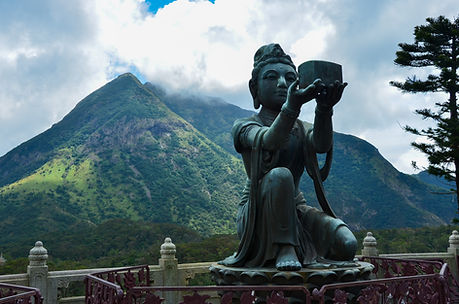
- The largest island in Hong Kong, home to the international airport. It provides a stark contrast to the dense city, featuring the massive Tian Tan Buddha (Big Buddha), the Ngong Ping 360 cable car, and the traditional stilt-house fishing village of Tai O.
2. Lamma Island
- A highly popular, laid-back weekend escape. There are no cars on the island; visitors hike along coastal trails between the villages of Yung Shue Wan and Sok Kwu Wan, famously ending the day with a massive, fresh seafood feast.
3. Victoria Harbour
- The defining geographical feature of the city, separating Hong Kong Island from Kowloon. Crossing the harbor on the historic, cheap Star Ferry is one of the quintessential Hong Kong experiences.
-
Find the perfect place to stay in any of these top cities and islands with Booking.com, Hotels.com and Vrbo – offering entire homes and apartments for a comfortable and private experience.
Lantau Island
Things to see
Natural Attractions
1. Victoria Peak (The Peak)
- The highest point on Hong Kong Island. Accessible via the historic Peak Tram, it offers the most famous, jaw-dropping panoramic view of the city’s skyscrapers and Victoria Harbour, particularly stunning at twilight.
2. Dragon’s Back Trail
- Arguably the most famous and accessible hike in Hong Kong. Located on the southeastern side of Hong Kong Island, this undulating ridge trail offers spectacular, sweeping views of the coastline, the South China Sea, and ends at the surfing beach of Big Wave Bay.
3. Hong Kong UNESCO Global Geopark
- Located in the remote eastern Sai Kung Peninsula, this park features spectacular, towering hexagonal volcanic rock columns rising directly from the sea, best explored via chartered boat or sea kayak.
Historical and Cultural Sites
1. Tian Tan Buddha (The Big Buddha)
- A colossal, 34-meter-tall bronze statue of a seated Buddha located high in the mountains of Lantau Island. Visitors must climb 268 steps to reach the base, which is situated near the serene Po Lin Monastery.
2. Wong Tai Sin Temple
- One of the most famous and active Taoist temples in Hong Kong. It is renowned for its vibrant architecture and the practice of kau chim—shaking a bamboo cylinder until a fortune stick falls out to be interpreted by a soothsayer.
3. Man Mo Temple
- Tucked amidst the skyscrapers of Sheung Wan, this mid-19th-century temple is dedicated to the gods of literature and war. The interior is incredibly atmospheric, filled with the thick, fragrant smoke of massive, coiled incense hanging from the ceiling.
Unique Experiences
1. Riding the "Ding Ding" Trams
- Taking a ride on the historic, narrow, double-decker trams that trundle slowly east-to-west along the northern coast of Hong Kong Island. Sitting in the front row on the upper deck costs pennies and offers incredible views of the bustling street life.
2. Symphony of Lights
- Every night at 8:00 PM, over 40 skyscrapers on both sides of Victoria Harbour participate in a synchronized, massive laser and light show set to music, best viewed from the Tsim Sha Tsui promenade.
3. Eating Dim Sum at a traditional Teahouse
- Participating in yum cha (drinking tea) while waitresses push metal carts piled high with bamboo steamers around a chaotic, noisy dining room. Snagging baskets of har gow (shrimp dumplings) and siu mai (pork dumplings) is a deeply cultural experience.
-
The best way to explore major cities and must-see attractions is by booking guided tours.* They offer convenience, local insights, and often save time when visiting popular sights.
Victoria Peak

Unique Accomondations/Foodspots
Accommodations
The Upper House
Location: Admiralty
A sleek, minimalist luxury hotel perched high above the city, featuring serene, design-forward rooms with breathtaking panoramic views of Victoria Harbour and open limestone bathrooms overlooking the skyline.
Restaurants/Bars
Ping Pong 129
Location: Sai Ying Pun
A cool, hidden speakeasy bar tucked behind an unassuming door that looks like a storage unit. Inside a former subterranean ping pong hall, it features high industrial ceilings, neon art, and an extensive menu of Spanish gin and tonics.
Tours to do
1. The Island and Peak Classic
- A 3-day itinerary focused entirely on Hong Kong Island and the Harbour. Includes taking the Peak Tram, exploring the antique shops of Hollywood Road in Central, riding the Star Ferry to Tsim Sha Tsui, and dining in Soho.
Best Time: October to April
Average Cost: $600 – $1,000 per person
2. The Lantau and Lamma Retreat
- A 4-day itinerary highlighting Hong Kong's greener side. Spend a full day on Lantau Island (Big Buddha and Tai O village), take a day to hike the Dragon's Back, and spend a relaxing afternoon eating seafood on Lamma Island.
Best Time: November or March
Average Cost: $700 – $1,200 per person
Tai O village

How to get around
1. MTR (Mass Transit Railway)
- The absolute backbone of Hong Kong travel. It is incredibly clean, fast, cheap, and covers almost the entire territory. Signage is perfectly bilingual, making it impossible to get lost.
2. Octopus Card
- A non-negotiable requirement for visitors. This stored-value smart card is used not only for the MTR, buses, and ferries but is also universally accepted at convenience stores (7-Eleven), supermarkets, and fast-food chains. You can now load it directly onto your smartphone via Apple Pay or Google Wallet.
3. Red Urban Taxis
- Ubiquitous and relatively cheap by global financial center standards. They are heavily regulated and strictly metered. Note that drivers frequently do not speak English; having your destination written in traditional Chinese characters on your phone is essential.
4. Star Ferry
- The historic, green-and-white double-decker boats that cross Victoria Harbour between Central and Tsim Sha Tsui. At less than fifty cents a ride, it remains one of the greatest travel bargains in the world.
-
You can find great car rental deals for your vacation on Expedia *
Did you know?
Surprising Greenery - Despite its hyper-dense concrete jungle, around 40% of Hong Kong's total land area is preserved as national parks, hiking trails, and nature reserves.
What to eat
1. Dim Sum
- The quintessential Hong Kong meal. A vast array of bite-sized dishes served in bamboo steamer baskets or on small plates. Classics include har gow (translucent shrimp dumplings), siu mai (pork and shrimp dumplings), and char siu bao (fluffy steamed BBQ pork buns).
2. Char Siu (Roast Meat)
- Hong Kong’s famous Cantonese roasted meats (siu mei), most notably char siu (barbecued pork) featuring a shiny, sweet, and deeply savory glaze, or sui yuk (crispy roasted pork belly), typically served simply over white rice.
3. Pineapple Bun with Butter (Bolo Bao)
- A classic bakery staple that contains no actual pineapple; it gets its name from the sugary, crumbly top crust that resembles the fruit. It is famously served sliced in half with a thick, cold slab of butter inserted in the middle.
4. Hong Kong-style Milk Tea
- A highly potent, incredibly smooth local beverage. It consists of a strong blend of black teas (often strained through a sackcloth, earning it the nickname "pantyhose tea") mixed with rich, sweet evaporated or condensed milk.
Dim Sum

Flights
Flight prices are approximate and vary by departure city, airline, and booking time. Check airlines or travel platforms for the latest details.
* Please note: All prices are rough estimates for orientation purposes only and may vary by region.
Main Airport: Hong Kong International Airport (HKG)
Flight Prices and Seasons:
From Europe
- Average Round-Trip Cost: €700 to €1,200 (Excellent direct connectivity via Cathay Pacific, British Airways, Air France, and Lufthansa).
- Cheapest Months: November and March.
- Peak Prices: July, August, and December.
From North America
- Average Round-Trip Cost: $1,000 to $1,800 (Extensive direct flights from both the West Coast and East Coast via Cathay Pacific and United Airlines).
- Cheapest Months: October and February.
- Peak Prices: June, July, and late December.
From Asia
- Average Round-Trip Cost: $200 to $500 (Massive, cheap connectivity across the entire continent, served heavily by low-cost carriers like HK Express).
- Cheapest Months: May and September.
- Peak Prices: Lunar New Year (January/February) and - Golden Week.
From Australia
- Average Round-Trip Cost: $800 to $1,400 (Direct flights from Sydney, Melbourne, and Brisbane via Cathay Pacific and Qantas).
- Cheapest Months: May and November.
- Peak Prices: December and January.
From Africa
- Average Round-Trip Cost: $900 to $1,500 (Direct connectivity via Ethiopian Airlines from Addis Ababa, or routed through Middle Eastern hubs).
- Cheapest Months: March and October.
- Peak Prices: July and August.
-
You can find the best flight deals with Skyscanner or plan the whole vacation, including flights, transportation, hotels and tours with Expedia *
Airport Location
Visa
1. Visa Requirement
- Hong Kong operates under a distinct and entirely separate immigration policy from mainland China. Citizens of over 170 countries (including the US, UK, Canada, Australia, and most of the EU) do not require a visa for tourist stays ranging from 7 to 180 days.
2. Consular Processing
- For visa-exempt nationalities, no prior consular processing is required; a landing slip detailing the allowed length of stay is issued electronically at immigration.
3. Required Documentation
- A passport valid for at least one month beyond the intended date of departure (though six months is highly recommended by airlines), and occasionally proof of onward travel.
4. Health Requirements
- No mandatory vaccinations are required. Routine vaccinations are recommended. Hong Kong possesses world-class, highly advanced public and private healthcare systems.
5. Travel Insurance
- Highly recommended. While the quality of care in public hospitals is exceptional, the non-resident emergency fees can be extremely high, and private hospitals demand significant upfront payments or comprehensive insurance guarantees.
Important things to know
1. Payments
- The official currency is the Hong Kong Dollar (HKD). While credit cards (Visa/Mastercard) and digital payments (Apple Pay, AlipayHK, WeChat Pay) are widely accepted in retail and mid-range to high-end dining, smaller local eateries (cha chaan tengs), wet markets, and red taxis operate almost exclusively on cash or the Octopus Card.
2. Tap Water
- Municipal tap water is treated to World Health Organization standards and is technically safe. However, due to the age of the plumbing in many older buildings, locals universally boil tap water before drinking, or rely on bottled water.
3. Electricity
- The standard electrical voltage is 220V with a frequency of 50Hz. Hong Kong strictly utilizes the British-style plug type G (three rectangular pins).
4. Tipping
- A 10% service charge is automatically added to the bill in most mid-range and high-end restaurants. However, it is customary to leave small change or round up the bill. In local diners, taxis, or street food stalls, tipping is not expected at all.
5. SIM Cards
- Purchasing a prepaid tourist SIM card (from providers like CSL, SmarTone, or 3HK) or an eSIM prior to arrival is highly recommended. Note that unlike mainland China, the internet in Hong Kong is unrestricted; Google, WhatsApp, and Western social media work perfectly without a VPN.
6. Driving Side
- Vehicles drive on the left side of the road.
Souveniers
1. Carved Jade
- The Jade Market in Yau Ma Tei is filled with vendors selling hundreds of variations of this highly prized green stone, ranging from cheap trinkets to incredibly expensive, high-quality bangles and pendants (buyer beware on authenticity).
2. Custom Tailoring
- Hong Kong is world-famous for its bespoke tailoring industry. Districts like Tsim Sha Tsui are packed with highly skilled tailors capable of cutting, fitting, and producing incredibly high-quality, custom-made suits and shirts in just 24 to 48 hours.
3. Chinese Tea and Teaware
- Specialty tea shops scattered throughout Sheung Wan sell premium loose-leaf teas (like aged Pu'er or Tieguanyin) and beautiful, delicate Yixing clay teapots used in traditional Chinese tea ceremonies.
Carved Jade

Location
Reviews
You already visited this country? Share your experiences with others! Tell us what’s worth seeing, what to skip, the things you wish you knew before your trip, what surprised you, what do you wish you knew earlier? Leave a review and help others plan smarter. Thanks in advance! :))