


Country Info | Read more

Flags are sourced from free platforms like flagpedia.net
Eswatini
Eswatini, a majestic kingdom of rolling valleys and rich traditions. Get up close to rhinos on foot, witness vibrant royal festivals, and embrace a deeply authentic African spirit.
* Affiliate links are marked with an asterisk (*). We may earn a commission at no extra cost to you.
Photos without credits are sourced from free platforms like Unsplash and Pexels


Summary
Neighboring Countries
Did you know?
Name Confusion – The King changed the nation's name from Swaziland in 2018 partly to stop people from constantly confusing it with Switzerland.
Overview
Months
March, April, May, June, July, August, September, October, November
Vacation type
Mountains, Safari
Expenses
0-50€, <100€, <150€, <200€, Over 200€
Temperature
10-20°C, 20-25°C
Rainfall
0-50mm, 50-100mm, 100-150mm
Safety
Medium
Continent
Africa
Currency
South African rand
Languages
Siswati, English
Currency Converter
When to visit
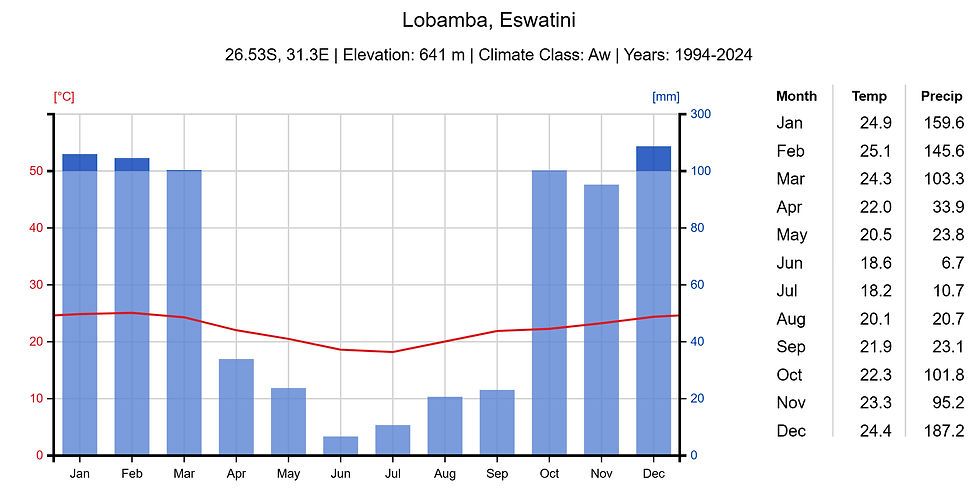
The optimal periods for travel to Eswatini are the dry winter months (May to September). Weather during this timeframe is characterized by pleasant, mild daytime temperatures and crisp, cool nights with virtually zero precipitation. These conditions support excellent terrestrial navigation, optimize wildlife observation as animals congregate around shrinking water sources, and facilitate regional transit across both paved and unpaved infrastructure.This period corresponds with the highest accessibility to the lowveld national parks and operational stability for highveld trekking routes. Accommodation and private transport costs remain stable, offering generally higher value compared to neighboring South Africa, though premium safari lodges experience high demand.
The wet summer season (October to April) brings intense heat, high humidity, and frequent, heavy afternoon thunderstorms. This period compromises overland transit on unpaved rural routes, causing mud accumulation and localized washouts. Access to specific remote wildlife sectors becomes logistically challenging, though the lush, green landscapes are highly scenic and birdwatching is at its peak.
-
Plan the whole vacation, including flights, transportation, hotels and tours with Expedia *

Climate Data
Peak Season (May to September)
Average Sunny Hours per Day: 7 to 9 hours.
Rain Frequency: Precipitation is exceedingly rare.
Rainy Hours per Day: Less than 1 hour.
Intensity: Rain events are highly localized anomalies.
Duration: Brief showers that evaporate rapidly.
Off-Peak Season (October to April)
Average Sunny Hours per Day: 5 to 7 hours.
Rain Frequency: Frequent, particularly in the late afternoon.
Rainy Hours per Day: 2 to 4 hours.
Intensity: Rain is intense, often accompanied by severe lightning and thunderstorms.
Duration: Storm systems generally last for a few hours before clearing.
Climate Chart
_edited_edited_edited_e.jpg)
Data Source: Global Historical Climatology Network
ClimateCharts.net
Weather, Crowds and Costs
Per one person
Tourist Season: May-September
1. Budget Travel ($40-80/day)
Accommodation: $20-40/night (backpackers, basic guesthouses, or national park campsites).
Food: $10-15/day (local supermarkets, informal street eateries).
Activities: $5-15/day (national park entry fees, self-guided hikes).
Transportation: $5-10/day (shared public minibuses).
Other Costs: $2-5/day (bottled water, incidental expenses).
2. Mid-Range Travel ($100-220/day)
Accommodation: $60-120/night (standard secure hotels, mid-tier park rondavels).
Food: $25-50/day (mid-range restaurants in Ezulwini Valley or Mbabane).
Activities: $20-60/day (guided game drives, cultural village entry).
Transportation: $20-40/day (standard rental car fuel and daily rate apportioned).
Other Costs: $10-20/day (local goods, souvenirs).
3. Luxury Travel ($300+/day)
Accommodation: $180+/night (secure premium lodges, private luxury safari camps).
Food: $60+/day (upscale dining within private reserves).
Activities: $80+/day (private rhino tracking, specialized guided logistics).
Transportation: $80+/day (premium 4x4 rental or private scheduled transfers).
Other Costs: $20+/day (premium goods).
Off-Peak Season: October-April
1. Budget Travel ($35-70/day)
Accommodation: $15-35/night (basic lodgings).
Food: $10-15/day (local markets).
Activities: $5-10/day (indoor sites).
Transportation: $5-10/day (shared transit).
Other Costs: $2-5/day (incidentals).
2. Mid-Range Travel ($90-180/day)
Accommodation: $50-100/night (standard hotels).
Food: $20-40/day (standard restaurants).
Activities: $15-40/day (accessible guided tours).
Transportation: $15-30/day (rental car).
Other Costs: $5-10/day (goods).
3. Luxury Travel ($250+/day)
Accommodation: $150+/night (premium hotels).
Food: $50+/day (premium dining).
Activities: $60+/day (private guided logistics).
Transportation: $70+/day (private secure transit).
Other Costs: $15+/day (premium goods).
-
You can find accomendations that fit your trip and budget on Booking.com, Vrbo and Hotels.com


Best Regions to visit
Cities
1. Mbabane
- The executive capital and primary urban center, situated in the highveld. It serves as the main administrative hub and provides the most comprehensive commercial services in the nation.
2. Manzini
- The largest city and the primary industrial and commercial hub, located in the central middleveld. It acts as the central transit point for the national highway system.
3. Lobamba
- The spiritual and legislative capital, situated in the Ezulwini Valley. It houses the Parliament, the National Museum, and serves as the residence of the Queen Mother.
4. Siteki
- A regional administrative town located in the eastern Lubombo Mountains. It functions as a logistical waypoint for travelers heading toward the Mozambique border.
Mbabane

Did you know?
Absolute Power – It proudly stands as the very last absolute monarchy remaining on the entire African continent!.
Islands
Eswatini is a landlocked country, so it doesn't have any natural islands like coastal nations do.
-
Find the perfect place to stay in any of these top cities and islands with Booking.com, Hotels.com and Vrbo – offering entire homes and apartments for a comfortable and private experience.
River

Things to see
Natural Attractions
1. Hlane Royal National Park
- The largest protected area in the country, located in the eastern lowveld. The ecosystem harbors significant populations of lions, elephants, and white rhinos.
2. Mkhaya Game Reserve
- A highly protected, specialized conservation area in the southeast. It serves as a premier global sanctuary for observing endangered black and white rhinos in the wild.
3. Malolotja Nature Reserve
- A rugged, high-altitude wilderness area in the northwest characterized by deep gorges, waterfalls, and an extensive network of challenging hiking trails.
4. Sibebe Rock
- A massive exposed granite dome situated near Mbabane. It represents the second-largest monolithic rock formation in the world, offering steep, unshaded hiking routes.
Historical and Cultural Sites
1. Mantenga Cultural Village
- A reconstructed traditional Swazi homestead located in the Ezulwini Valley, dedicated to preserving and demonstrating traditional architecture, daily life, and choral dance.
2. Eswatini National Museum
- A cultural facility situated in Lobamba, dedicated to documenting the ethnographic history, royal lineage, and natural history of the nation.
3. Nsangwini Rock Art
- An archaeological site located in the Komati Valley featuring well-preserved San rock paintings, offering historical insight into the region's earliest hunter-gatherer inhabitants.
Unique Experiences
1. Tracking Rhinos on Foot
- Utilizing experienced rangers in Mkhaya Game Reserve to safely approach wild black and white rhinos on foot within dense bushveld terrain.
2. Observing the Umhlanga (Reed Dance)
- Attending the massive annual cultural festival (typically late August or early September) where tens of thousands of Swazi maidens gather to present cut reeds to the Queen Mother.
3. Hiking the Great Monolith
- Executing the steep, physically demanding ascent up the smooth granite face of Sibebe Rock, guided by local community members.
4. Inspecting Artisan Workshops
- Navigating the craft centers of the Ezulwini Valley to observe the traditional manufacturing processes of complex wax candles and recycled glass blowing.
-
The best way to explore major cities and must-see attractions is by booking guided tours.* They offer convenience, local insights, and often save time when visiting popular sights.
Hlane Royal National Park

Unique Accomondations/Foodspots
Accommodations
Malandela's Guest House
Location: Malkerns Valley
You stay in a converted farmhouse surrounded by lovely gardens right next to a famous creative arts center. It features uniquely decorated rooms and a vintage stone horse carousel on the lawn.
Restaurants/Bars
Malandela's Farmhouse Restaurant & Pub
Location: Malkerns Valley
This cozy spot is built into the lively cultural hub of the valley. You can sit outside to eat great food while looking at views of the Swazi mountains and strange, artistic sculpture towers rising from the grass.
Tours to do
1. Ezulwini Royal Valley Circuit
- A localized vehicular transit operation inspecting the National Museum, Mantenga Cultural Village, and regional artisan markets.
Best Time: Year-round
Average Cost: $50 – $100 per person
2. Lowveld Big 5 Safari
- A terrestrial expedition requiring rental vehicles to access Hlane and Mkhaya for intensive, multi-day wildlife observation and guided bush walks.
Best Time: May to September
Average Cost: $300 – $600 per person
3. Malolotja Wilderness Trek
- A multi-day, self-supported hiking expedition navigating the remote highveld trails and staying in unserviced wilderness camps.
Best Time: April to October
Average Cost: $100 – $200 per person
Malolotja Wilderness Trek

Photo By René C. Nielsen https://commons.wikimedia.org/wiki/File:Malolotja.jpg
How to get around
1. Rental Vehicles
- Procuring a standard sedan or 2WD vehicle is highly efficient for navigating the excellently paved primary highway network. 4x4 vehicles are only necessary for specific remote reserves or extreme weather.
2. Public Minibuses (Kumbis)
- Highly affordable but crowded transit options utilized primarily by locals. They operate without fixed schedules and only depart when maximum passenger capacity is achieved.
3. Private Transfers
- Pre-booked shuttle services provide secure, point-to-point transit between major hotels, the international airport, and neighboring transit hubs in South Africa.
-
You can find great car rental deals for your vacation on Expedia *
Did you know?
World’s Oldest Mine – The Ngwenya Mine is the oldest officially recognized mining site on Earth, dating back an incredible 43,000 years.
What to eat
1. Sishwala
- The primary dietary staple. A dense, thick porridge constructed from dried maize or sorghum flour, utilized to consume accompanying meat stews or vegetable relishes.
2. Umncweba
- A traditional preparation of cured, dried, and spiced raw meat (similar to biltong), frequently consumed as a high-protein travel ration or snack.
3. Emasi
- Fermented, thick sour milk. It is traditionally poured over a crumbled maize meal base, serving as a highly popular and culturally significant comfort dish.
4. Siphuphe semabhontjisi
- A hearty, thick porridge synthesized by mashing boiled sugar beans together with maize meal, yielding a dense, protein-rich vegetarian staple.
Sishwala

Flights
Flight prices are approximate and vary by departure city, airline, and booking time. Check airlines or travel platforms for the latest details.
* Please note: All prices are rough estimates for orientation purposes only and may vary by region.
Main Airport: King Mswati III International Airport (SHO)
Flight Prices and Seasons:
(Note: Almost all international flights route exclusively through Johannesburg, South Africa (JNB). Long-haul prices reflect flights to JNB with a regional connection to SHO).
From Europe
- Average Round-Trip Cost: €700 to €1,300.
- Cheapest Months: February and March.
- Peak Prices: July, August, and December.
From North America
- Average Round-Trip Cost: $1,300 to $2,200.
- Cheapest Months: October and November.
- Peak Prices: June to August and December.
From Asia
- Average Round-Trip Cost: $1,000 to $1,900.
- Cheapest Months: March and May.
- Peak Prices: December and January.
From Australia
- Average Round-Trip Cost: $1,500 to $2,500.
- Cheapest Months: May and November.
- Peak Prices: December and January.
From Africa (Direct from JNB)
- Average Round-Trip Cost: $150 to $300.
- Cheapest Months: Year-round stability.
- Peak Prices: December.
-
You can find the best flight deals with Skyscanner or plan the whole vacation, including flights, transportation, hotels and tours with Expedia *
Airport Location
Visa
1. Visa Requirement
- A valid passport is required. Nationalities from many countries (including the EU, US, and UK) do not require a tourist visa for stays up to 30 days.
2. Consular Processing
- For nationalities requiring a visa, processing must be completed at an Eswatini embassy or consulate prior to travel, as electronic visa systems are not currently standard.
3. Required Documentation
- Entry requires a passport valid for at least three months beyond the date of departure, a confirmed return or onward ticket, and proof of sufficient funds.
4. Health Requirements
- A Yellow Fever vaccination certificate is mandatory if arriving from an endemic country. Malaria prophylaxis is highly advised for the lowveld regions, especially during the wet summer months.
5. Travel Insurance
- Procuring comprehensive medical insurance with evacuation coverage is highly advised due to limited advanced medical facilities in the country.
Important things to know
1. Payments
- The official currency is the Lilangeni (SZL), which is pegged 1:1 to the South African Rand (ZAR). ZAR banknotes are universally accepted alongside the Lilangeni. Credit cards are widely accepted at hotels, restaurants, and major supermarkets, but cash remains necessary for rural markets and small vendors.
2. Tap Water
- Municipal tap water is generally safe for consumption in major urban centers like Mbabane and the Ezulwini Valley. In rural areas or lowveld reserves, reliance on commercially sealed bottled water is required.
3. Electricity
- The standard voltage is 230V. Plug type M (three large round pins, standard South African) is utilized. The national power grid is generally stable but occasionally subject to scheduled load reduction imported from South Africa.
4. Tipping
- Tipping is a formal social expectation in the service industry. A standard 10% addition is expected in restaurants, and daily cash increments are standard for safari guides and petrol station attendants.
5. SIM Cards
- Local providers (e.g., MTN Eswatini, Eswatini Mobile) supply SIM cards at the airport and in major towns. Connectivity is reliable in urban areas and along the central corridor, but drops to basic signals in the deep highveld or lowveld borders.
6. Driving Side
- Vehicles operate on the left side of the road.
Souveniers
1. Swazi Candles
- Intricate, highly decorative wax candles crafted utilizing the traditional millefiori technique, frequently shaped into regional wildlife figures and exported globally.
2. Ngwenya Glass
- Hand-blown glassware, decorative items, and animal sculptures manufactured entirely from 100% recycled glass sourced by local communities.
3. Woven Sisal Baskets
- Tightly constructed, functional, and decorative baskets woven by rural women utilizing dyed sisal fibers, featuring complex geometric patterns unique to the region.
Sisal Baskets

Location
Reviews
You already visited this country? Share your experiences with others! Tell us what’s worth seeing, what to skip, the things you wish you knew before your trip, what surprised you, what do you wish you knew earlier? Leave a review and help others plan smarter. Thanks in advance! :))