


Country Info | Read more

Flags are sourced from free platforms like flagpedia.net
Niger
Journey into Niger, where vibrant nomadic festivals light up the Sahel. Marvel at the swirling dunes of the Ténéré desert, track the last wild giraffes of West Africa, and experience true desert hospitality.
* Affiliate links are marked with an asterisk (*). We may earn a commission at no extra cost to you.
Photos without credits are sourced from free platforms like Unsplash and Pexels


Summary
Did you know?
Monster Crocs – Fossils of the massive, 40-foot-long ancient "SuperCroc" were discovered buried deep within its vast desert sands!
Overview
Months
April, December, February, January, June, September, October, November, March, May
Vacation type
Mountains, Safari
Expenses
0-50€, <100€, <150€, <200€, Over 200€
Temperature
25-30°C, Over 30°C
Rainfall
0-50mm, 50-100mm
Safety
Dangerous
Continent
Africa
Currency
West African CFA franc
Languages
Hausa, French
Currency Converter
When to visit
Travel to this country is currently not recommended or possible due to the ongoing war.
The optimal travel period for Niger is the winter dry season (December to February). Average daytime high temperatures range from 31°C to 34°C, with nighttime lows dropping significantly to 14°C to 17°C in the desert interior. Precipitation is practically non-existent (0 mm monthly average), and relative humidity remains firmly below 20%. These stable, comparatively cooler conditions are strictly required for navigating the harsh Sahelian and Saharan environments.
The transitional hot season (March to May) brings extreme thermal stress, with daily highs routinely exceeding 42°C.
The subsequent monsoonal wet season (June to September) delivers heavy thunderstorms to the southern regions, peaking at 100-150 mm of rain in August, which consistently washes out unpaved terrestrial routes.
-
Plan the whole vacation, including flights, transportation, hotels and tours with Expedia *

Climate Data
Peak Season (December to February)
Average Sunny Hours per Day: 9 to 10 hours.
Rain Frequency: 0 days per month.
Rainy Hours per Day: 0 hours.
Intensity: Completely dry.
Duration: Continuous clear skies, occasionally obscured by dense Harmattan dust plumes blowing southward from the Sahara.
Off-Peak Season (June to September)
Average Sunny Hours per Day: 6 to 8 hours.
Rain Frequency: 5 to 12 days per month (heaviest in August).
Rainy Hours per Day: 1 to 3 hours.
Intensity: Violent, fast-moving monsoonal squalls in the south; isolated, brief showers in the central desert.
Duration: Short, torrential evening downpours preceded by high winds and sudden temperature drops.
Climate Chart
_edited_edited_edited_e.jpg)
Data Source: Global Historical Climatology Network
ClimateCharts.net
Weather, Crowds and Costs
Per one person
Tourist Season: December-February
1. Budget Travel ($30-60/day)
Accommodation: $15-25/night (basic guesthouses or traditional dormitories in Niamey or Zinder).
Food: $5-15/day (local street food, rice and bean dishes from market stalls).
Activities: $5-10/day (unguided local market visits, minor museum entrance fees).
Transportation: $3-8/day (shared bush taxis or local minibuses for intercity transit).
Other Costs: $2-5/day (bottled water, street tea).
2. Mid-Range Travel ($100-180/day)
Accommodation: $50-90/night (secure, air-conditioned hotels in major cities with reliable backup generators).
Food: $20-40/day (mid-range restaurants serving Lebanese or French-influenced cuisine).
Activities: $20-40/day (guided day trips to nearby wildlife reserves, boat rides on the Niger River).
Transportation: $10-20/day (private urban taxis or domestic bus services on premium lines).
Other Costs: $5-10/day (incidentals, minor tips).
3. Luxury / Expedition Travel ($350+/day)
Accommodation: $150-250+/night (premium business hotels in Niamey catering to diplomats and expatriates).
Food: $50-80+/day (high-end dining at luxury hotel restaurants).
Activities: $100+/day (privately guided, multi-day 4x4 expeditions with armed escorts if required).
Transportation: $150+/day (chartered, fully equipped 4x4 vehicle with a dedicated local driver and guide).
Other Costs: $20+/day (high-end artisanal crafts, Tuareg silver).
Off-Peak Season: June-September
Note: Desert tracks become impassable and heat is oppressive; tourism focuses heavily on the capital and southern corridor.
1. Budget Travel ($25-50/day)
Accommodation: $10-20/night (discounted basic lodgings).
Food: $5-15/day (local eateries).
Activities: $5/day (indoor historical sites).
Transportation: $3-5/day (shared transit).
Other Costs: $2-5/day (incidentals).
2. Mid-Range Travel ($80-150/day)
Accommodation: $40-70/night (standard hotels).
Food: $15-30/day (standard restaurants).
Activities: $15-25/day (accessible capital-based tours).
Transportation: $10-15/day (private urban taxis).
Other Costs: $5-10/day (goods).
3. Luxury / Expedition Travel ($250+/day)
Accommodation: $120-200+/night (premium urban hotels).
Food: $40-70+/day (premium dining).
Activities: $50+/day (private logistics for southern wildlife areas).
Transportation: $100+/day (private air-conditioned transit).
Other Costs: $15+/day (premium goods).
-
You can find accomendations that fit your trip and budget on Booking.com, Vrbo and Hotels.com


Best Regions to visit
Cities
1. Niamey
- The sprawling, low-rise capital city built along the banks of the Niger River. It serves as the political and economic center, characterized by lively open-air markets, the Grand Mosque, and a significant expatriate presence.
2. Agadez
- Historically the most important city in the northern desert and a major hub for Tuareg culture. It is famous for its 16th-century mud-brick architecture, though travel here requires extensive security planning.
3. Zinder
- The former capital and the cultural heartland of the Hausa people. The city is renowned for the Birni quarter, featuring intricately decorated traditional mud-brick houses and the historic Sultan's Palace.
4. Maradi
- The commercial capital of Niger, located near the Nigerian border. It is a bustling, trade-oriented city focused heavily on agriculture and cross-border commerce.
Niamey

Did you know?
Loneliest Tree – It was home to the most isolated tree on Earth until it was bizarrely run over by a supposedly drunk truck driver in 1973.
Islands
Niger is a landlocked country with no sea islands.
-
Find the perfect place to stay in any of these top cities and islands with Booking.com, Hotels.com and Vrbo – offering entire homes and apartments for a comfortable and private experience.

Things to see
Natural Attractions
1. Kouré Giraffe Reserve
- A protected area located just an hour east of Niamey. It is the last remaining natural habitat for the highly endangered West African giraffe, characterized by their lighter coat and distinct spot patterns.
2. Aïr and Ténéré Natural Reserves
- A massive UNESCO World Heritage site combining the jagged, volcanic peaks of the Aïr Mountains with the seemingly endless, shifting sand dunes of the Ténéré desert.
3. W National Park
- A transboundary UNESCO site shared with Benin and Burkina Faso, named for a distinct "W" shaped bend in the Niger River. It is a critical sanctuary for West African lions, elephants, and buffalo.
Historical and Cultural Sites
1. Agadez Grand Mosque
- An iconic, towering 27-meter-high minaret constructed entirely of mud-brick and reinforced with visible wooden scaffolding. It is the tallest mud-brick structure in the world and central to Tuareg Islamic heritage.
2. Yaama Mosque
- Located in the Tahoua region, this highly distinctive mosque was built in the 1960s using traditional mud-brick techniques but features complex, domed architecture that won the Aga Khan Award for Architecture.
3. Sultan's Palace of Zinder
- A highly decorated, traditional administrative compound in the old quarter of Zinder. It remains the active residence of the local Sultan, maintaining centuries-old Hausa ceremonial traditions.
Unique Experiences
1. Attending the Cure Salée
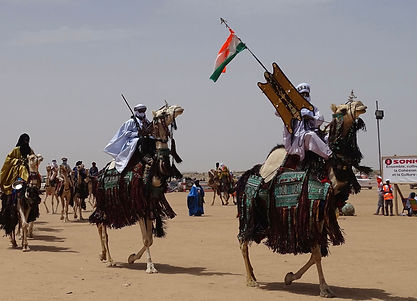
- An annual, massive gathering of Wodaabe and Tuareg nomads near In-Gall marking the end of the rainy season (usually September). Herders bring their livestock to the salt-rich flats, engaging in complex courtship dances and camel races.
2. Pirogue Navigation at Sunset
- Chartering a traditional, flat-bottomed wooden boat to quietly navigate the Niger River at dusk, observing hippos and extensive birdlife while the sun sets over the capital.
3. The Gerewol Festival
- A specific, highly competitive courtship ritual held during the Cure Salée where young Wodaabe men paint their faces, adorn elaborate costumes, and perform endurance dances to attract female judges.
-
The best way to explore major cities and must-see attractions is by booking guided tours.* They offer convenience, local insights, and often save time when visiting popular sights.
Kouré Giraffe Reserve

Unique Accomondations/Foodspots
Accommodations
Noom Hotel Niamey
Location: Niamey (Avenue de l'Uranium)
A sleek, contemporary 5-star hotel situated right in the heart of the capital overlooking the river area, featuring modern minimalist design, an outdoor swimming pool, a lively terrace, and upscale amenities.
Restaurants/Bars
Zaxi Rooftop Lounge & Bar
Location: Boulevard de la République, Niamey
A premier nightlife and dining destination in the capital, offering a sophisticated open-air rooftop setting with breathtaking panoramic views over the city, expertly crafted cocktails, and a vibrant fusion menu.
Tours to do
1. The Kouré and River Circuit
- A heavily utilized, short-duration itinerary based out of Niamey. It involves a half-day 4x4 excursion to track the West African giraffes, followed by a cultural tour of the National Museum and a river transit.
Best Time: December to February
Average Cost: $150 – $300 per person
2. The Hausa Cultural Route
- An overland journey driving east from Niamey along the southern paved highway to Zinder. The focus is strictly on observing traditional Hausa architecture, rural agricultural practices, and visiting the Sultanate.
Best Time: November to January
Average Cost: $400 – $700 per person
3. The Aïr Mountains Expedition
- An extreme, logistically complex deep-desert operation initiating from Agadez. Convoys of 4x4s push into the volcanic massifs to reach the Timia Oasis and prehistoric rock art sites (Requires severe security vetting).
Best Time: December to January
Average Cost: $1,500 – $2,500+ per person

How to get around
1. Armored/Secured Convoys
- For any travel north of the Tahoua line or toward the borders of Mali and Libya, military escorts or heavily vetted private security convoys are frequently mandated by local authorities due to regional instability.
2. Private 4x4 Charters
- Essential for navigating the degraded road networks outside the primary Niamey-Zinder corridor. High-clearance vehicles with heavy-duty suspension and dual spare tires are standard operating requirements.
3. Domestic Aviation
- Niger Airlines provides vital, though sometimes irregularly scheduled, flights connecting Niamey to distant regional hubs like Agadez, Maradi, and Zinder, bypassing hazardous overland routes.
4. Intercity Buses
- Private bus companies (such as Rimbo Transport) operate large coaches along the main southern highway. They are the most common form of long-distance transit for locals but are subject to frequent breakdowns.
-
You can find great car rental deals for your vacation on Expedia *
Did you know?
Male Beauty Pageants – The nomadic Wodaabe tribe hosts an annual festival where men wear elaborate makeup and compete to impress female judges.
What to eat
1. Djerma Stew (Sauce Kopto)
- A deeply savory, thick stew made from pounded moringa leaves, peanuts, and seasonal vegetables, typically served over a dense staple like rice or millet.
2. Kilishi
- A highly popular form of dried meat (similar to jerky). Thinly sliced beef or goat is heavily coated in a complex paste of peanuts, chili, and spices, then sun-dried and briefly roasted over a fire.
3. Tuwo
- The fundamental dietary staple of the region. It is a thick, dense, starchy swallow-food made by vigorously boiling and stirring millet, sorghum, or maize flour until it forms a solid paste used to scoop up sauces.
4. Fari Masa
- Deep-fried, savory dough balls made from millet or wheat flour. They are commonly sold as street food and are often consumed in the morning, dipped in spicy sauces or eaten plain.

Flights
Flight prices are approximate and vary by departure city, airline, and booking time. Check airlines or travel platforms for the latest details.
* Please note: All prices are rough estimates for orientation purposes only and may vary by region.
Main Airport: Diori Hamani International Airport (NIM)
Flight Prices and Seasons:
From Europe
- Average Round-Trip Cost: €600 to €1,000 (Air France previously flew direct, but routes frequently shift to Royal Air Maroc via Casablanca, or Turkish Airlines via Istanbul).
- Cheapest Months: October and November.
- Peak Prices: July, August, and December.
From North America
- Average Round-Trip Cost: $1,200 to $2,000 (Routed via Paris, Istanbul, or Casablanca).
- Cheapest Months: February and March.
- Peak Prices: June, July, and December.
From Asia
- Average Round-Trip Cost: $1,400 to $2,500 (Routed via Istanbul or Addis Ababa).
- Cheapest Months: March and May.
- Peak Prices: December and January.
From Australia
- -A verage Round-Trip Cost: $2,200 to $3,800.
- Cheapest Months: May and November.
- Peak Prices: December -Peak Prices:
From Africa
- Average Round-Trip Cost: $300 to $800 (Connectivity via Ethiopian Airlines, ASKY, and Air Côte d'Ivoire).
- Cheapest Months: September and October.
- Peak Prices: August and December.
-
You can find the best flight deals with Skyscanner or plan the whole vacation, including flights, transportation, hotels and tours with Expedia *
Airport Location
Visa
1. Visa Requirement
- Visas are strictly required for the vast majority of foreign nationals prior to arrival.
2. Consular Processing
- E-visas and Visas on Arrival are generally not available. Travelers must submit physical passports and letters of invitation to a Nigerien embassy or consulate well in advance of travel.
3. Required Documentation
- A passport valid for six months, a completed visa application, and a localized letter of invitation or hotel reservation.
4. Health Requirements
- A Yellow Fever vaccination certificate is an absolute, mandatory requirement for entry. Comprehensive malaria prophylaxis is heavily advised year-round.
5. Travel Insurance
- Standard policies will often void coverage due to government travel advisories. Highly specialized, high-risk insurance (e.g., covering kidnap and ransom, and extreme medical evacuation) is required.
Important things to know
1. Payments
- The official currency is the West African CFA Franc (XOF). The economy operates almost entirely on cash. Credit cards are useless outside of a few luxury hotels and major airline offices in Niamey.
2. Tap Water
- Municipal tap water is biologically unsafe. Complete reliance on commercially sealed bottled water is a strict operational necessity to avoid waterborne pathogens.
3. Electricity
- The standard voltage is 220V. Plug types A, B, C, D, E, and F can be found, but C and E are most common. The electrical grid is highly unstable; rolling blackouts are a daily occurrence.
4. Tipping
- Tipping is customary but modest. Leaving 5-10% in upscale restaurants and rounding up fares for taxi drivers is appreciated. Small cash tips for local guides and security personnel are expected.
5. SIM Cards: Local providers including Zamani Telecom, Airtel, and Moov Africa offer prepaid SIMs. Registration requires a passport. Coverage drops entirely outside major towns.
6. Driving Side
- Vehicles operate on the right side of the road.
Souveniers
1. The Agadez Cross (Croix d'Agadez)
- The most famous piece of Tuareg jewelry. These highly intricate, geometric silver pendants are traditionally crafted using the lost-wax casting method. There are 21 traditional designs, each representing a different nomadic settlement or oasis.
2. Tuareg Leatherwork
- Masterfully crafted leather items colored with natural dyes (often red and green). Artifacts range from elaborately decorated camel saddles and geometric travel bags to the intricate sheaths of traditional Tuareg swords (takoba).
3. Hausa Pottery and Calabashes
- In the southern regions, artisans produce heavily decorated, fire-hardened clay pots and intricately carved, hollowed-out gourds (calabashes) used traditionally for storing milk, water, or grain.
Calabashes

Location
Reviews
You already visited this country? Share your experiences with others! Tell us what’s worth seeing, what to skip, the things you wish you knew before your trip, what surprised you, what do you wish you knew earlier? Leave a review and help others plan smarter. Thanks in advance! :))