


Country Info | Read more

Flags are sourced from free platforms like flagpedia.net
Indonesia (Java)
Java is the busy heart of Indonesia, mixing lively cities with amazing ancient history. You can watch the sunrise over the massive Borobudur temple or hike up to smoking volcanoes. It is an exciting island that is always full of energy.
* Affiliate links are marked with an asterisk (*). We may earn a commission at no extra cost to you.
Photos without credits are sourced from free platforms like Unsplash and Pexels


Summary
Neighboring Countries
Did you know?
Blue Fire Volcano – Kawah Ijen crater burns with eerie, glowing electric-blue flames at night caused by ignited sulfur gases escaping from the volcanic rock.
Overview
Months
April, May, June, July, August, September, October, November, December
Vacation type
Beach, Couple, Family, Mountains, Rainforest, Party, Diving/Snorkeling, Surfing
Expenses
0-50€, <150€, <200€, <100€, Over 200€
Temperature
25-30°C
Rainfall
50-100mm, 100-150mm
Safety
Safe
Continent
Asia
Currency
Indonesian rupiah
Languages
Indonesian
Currency Converter
When to visit
The best time to visit Java is during the dry season from May to September. During these months, the weather is hot, dry, and consistently sunny, making it the safest time to climb active volcanoes like Mount Bromo and Mount Ijen, or explore the ancient temples of Borobudur without heavy rain interruptions.
The wet season runs from October to April, with rainfall peaking in January and February. The monsoon brings high humidity and heavy, torrential downpours. While the mornings are often clear, the afternoons see massive rainstorms that can cause localized flooding in major cities like Jakarta and disrupt train schedules or mountain trekking routes.
-
Plan the whole vacation, including flights, transportation, hotels and tours with Expedia *

Climate Data
Peak Season: May to September (Dry Season)
Average Sunny Hours per Day: 8 to 10 hours.
Rain Frequency: 3 to 6 days per month.
Rainy Hours per Day: 1 to 2 hours.
Intensity: Brief, isolated afternoon showers.
Duration: Mostly clear, hot, and dry. Mountainous areas like the Dieng Plateau or Bromo drop to chilly temperatures at night.
Off-Peak Season: October to April (Wet Season)
Average Sunny Hours per Day: 4 to 6 hours.
Rain Frequency: 16 to 22 days per month.
Rainy Hours per Day: 3 to 5 hours.
Intensity: Heavy tropical thunderstorms and prolonged downpours.
Duration: Rain usually hits hard in the afternoon and evening. High humidity makes the lowlands feel extremely muggy.
Climate Chart

Data Source: Global Historical Climatology Network
ClimateCharts.net
Weather, Crowds and Costs
Per one person
Tourist Season: May-September
Budget Vacation ($25-45/day)
Accommodation: $10-18/night (backpacker hostels in Yogyakarta, basic local guesthouses).
Food: $5-10/day (street food carts, local warungs, bowls of bakso).
Activities: $5-10/day (public museum entries, walking historical districts).
Transportation: $3-7/day (local commuter trains, Gojek motorcycle taxis).
Other Costs: $2/day (bottled water, iced tea).
Mid-Range Vacation ($60-130/day)
Accommodation: $35-70/night (comfortable 3-star and 4-star city hotels, boutique heritage rooms).
Food: $15-30/day (air-conditioned local restaurants, mall dining, coffee shops).
Activities: $15-35/day (Borobudur/Prambanan entry tickets, guided jeep tours to Mount Bromo).
Transportation: $10-25/day (Executive class KAI trains, Grab cars).
Other Costs: $5/day (cafe stops, tips).
Luxury Vacation ($200-500+/day)
Accommodation: $150-350+/night (5-star international hotels in Jakarta, luxury heritage resorts overlooking Borobudur).
Food: $50-120/day (fine dining in Jakarta, upscale traditional Indonesian banquets).
Activities: $60-150+/day (private volcano trekking guides, exclusive cultural performances).
Transportation: $40-80/day (private chauffeur, premium domestic flights).
Other Costs: $15+/day (spa treatments, artisan batik shopping).
Off-Peak Season: October-April
Budget Vacation ($20-35/day)
Accommodation: $8-15/night (discounted hostel beds and budget rooms).
Food: $5-8/day (indoor food courts, local markets).
Activities: $3-8/day (indoor galleries, palace visits).
Transportation: $3-6/day (public transit, ride-hailing).
Other Costs: $1/day (rain poncho).
Mid-Range Vacation ($45-90/day)
Accommodation: $25-50/night (upgraded hotel rooms at low-season rates).
Food: $12-25/day (casual indoor dining, mall restaurants).
Activities: $10-25/day (cooking classes, batik workshops).
Transportation: $8-18/day (train tickets, local taxis).
Other Costs: $4/day (coffee, umbrella).
Luxury Vacation ($150-350+/day)
Accommodation: $100-250+/night (premium hotels offering heavy rainy-season promotions).
Food: $40-90/day (hotel dining, premium restaurants).
Activities: $50-100/day (private indoor cultural tours, spa days).
Transportation: $30-70/day (air-conditioned private transfers).
Other Costs: $10/day (local artisan crafts).
-
You can find accomendations that fit your trip and budget on Booking.com, Vrbo and Hotels.com


Best Regions to visit
Cities
1. Jakarta
- The massive, fast-paced capital city. It is a sprawling metropolis known for endless traffic, giant luxury shopping malls, and the historic Dutch colonial center of Kota Tua.
2. Yogyakarta (Jogja)
- The undisputed cultural and historical heart of Java. It is ruled by a Sultan and acts as the prime base for visiting ancient temples and experiencing traditional Javanese arts.
3. Bandung
- Surrounded by volcanic mountains and tea plantations, this cooler, high-altitude city is famous for its Dutch Art Deco architecture and thriving fashion outlet scene.
4. Surabaya
- Indonesia’s second-largest city, located in the east. It is a major business and port hub, serving as the gateway to Mount Bromo.
Jakarta

Did you know?
Temple Mountain – Borobudur is the world's biggest Buddhist temple, built with over 2 million carved stone blocks without using a single drop of mortar.
Islands
1. Thousand Islands (Kepulauan Seribu)
- A chain of islands located just off the coast of Jakarta in the Java Sea, offering quick escapes to white-sand beaches and coral reefs.
2. Karimunjawa
- A pristine, protected marine national park located north of Central Java, famous for crystal-clear waters, mangrove forests, and excellent snorkeling.
3. Madura
- A large, rugged island connected to Surabaya by the massive Suramadu Bridge, known for its traditional bull-racing festivals (Karapan Sapi).
-
Find the perfect place to stay in any of these top cities and islands with Booking.com, Hotels.com and Vrbo – offering entire homes and apartments for a comfortable and private experience.
Karimunjawa

Things to see
Natural Attractions
1. Mount Bromo
- An active, smoking volcano set inside a massive, desolate caldera known as the "Sea of Sand," creating one of the most famous sunrise viewpoints in Asia.
2. Mount Ijen
- A volcanic crater in East Java famous for its highly acidic turquoise crater lake and the surreal, glowing "blue fire" ignited by combusting sulfuric gases.
3. Dieng Plateau
- A misty, high-altitude volcanic caldera in Central Java dotted with ancient Hindu temples, bubbling mud pools, and brightly colored sulfur lakes.
Historical and Cultural Sites
1. Borobudur
- The largest Buddhist temple in the world, built in the 9th century. It is a massive stone pyramid consisting of nine stacked platforms topped by a central dome and 72 Buddha statues seated inside perforated stupas.
2. Prambanan
- A stunning 9th-century Hindu temple complex near Yogyakarta, characterized by tall, pointed towers dedicated to Shiva, Vishnu, and Brahma.
3. Kraton Ngayogyakarta Hadiningrat
- The grand palace complex of the Sultan of Yogyakarta, functioning as a living museum of Javanese court culture.
Unique Experiences
1. Midnight Hike to Ijen's Blue Fire
- Hiking up the steep volcano in the pitch dark with a gas mask to witness the electric blue flames burning inside the sulfur crater before dawn.
2. Watching the Ramayana Ballet
- Attending a dramatic, open-air traditional dance performance of the ancient Hindu epic, set directly in front of the illuminated Prambanan temples at night.
3. Riding the Java Railway
- Watching vibrant green rice paddies, jungle ravines, and volcanic peaks roll by from the panoramic windows of the comfortable Executive class KAI train.
-
The best way to explore major cities and must-see attractions is by booking guided tours.* They offer convenience, local insights, and often save time when visiting popular sights.
Mount Bromo

Unique Accomondations/Foodspots
Accommodations
The Phoenix Hotel Yogyakarta
Location: Malioboro, Yogyakarta, Java, Indonesia
A magnificent heritage hotel built in 1918, seamlessly blending colonial European architecture with rich Javanese art, featuring lush central courtyards, a tranquil swimming pool, and old-world elegance.
Restaurants / Bars
Ndoro Donker
Location: Ngargoyoso, Karanganyar, Central Java, Indonesia
A charming colonial-style tea house and restaurant nestled on the misty slopes of Mount Lawu, celebrated for its exceptional local plantation teas, traditional Javanese snacks, and cool mountain views.
Tours to do
1. The Great Java Overland Route
- Start in Jakarta, take the train to Bandung for tea plantations, continue to Yogyakarta to explore Borobudur, ride the train to Surabaya, take a 4x4 jeep to Mount Bromo for sunrise, and finish by crossing the ferry to Bali.
Best Time: May to September.
Average Cost: $450 – $900 per person.
2. The Central Cultural Deep Dive
- Fly directly into Yogyakarta. Spend four days exploring the Kraton, taking batik workshops, climbing Borobudur at sunrise, and eating through the vibrant street food scene along Malioboro Street.
Best Time: April to October.
Average Cost: $300 – $600 per person.

How to get around
1. Domestic Flights
- Given Indonesia's extensive geography, domestic flights are a common and efficient way to travel between islands and major cities. Airlines like Garuda Indonesia, Lion Air, and AirAsia offer flights connecting Jakarta, Bali, Surabaya, Yogyakarta, and other key destinations.
2. Public Buses
- Public buses operate in cities and towns throughout Indonesia. In major cities like Jakarta and Surabaya, there are city buses and intercity services. For longer distances, services like PO. Haryanto and PO. Sinar Jaya provide intercity and inter-island bus routes.
3. Metro and Light Rail
- Jakarta has a growing metro system called the Jakarta MRT, with future expansions planned. The city also has a light rail transit system known as LRT Jakarta. Other cities, like Surabaya, have limited light rail services.
4. Taxis and Ride-Hailing Apps
- Taxis are widely available in cities, and ride-hailing apps like Grab and Gojek are popular in major urban areas, offering rides, food delivery, and other services.
5. Car Rentals
- Renting a car is a good option for exploring different regions, especially in popular tourist areas like Bali or Yogyakarta. Driving is on the left side of the road. Major car rental companies like Avis, Hertz, and Bali Car Rental operate in key locations. Hiring a driver is common due to local driving conditions.
6. Motorcycles and Scooters
- Renting a motorcycle or scooter is a popular way to get around, particularly in places like Bali and Ubud. Services like Gojek and Grab also offer motorcycle taxis for quick and convenient travel.
7. Boats and Ferries
- With many islands to explore, boats and ferries are essential for inter-island travel. Services connect popular islands like Bali, Lombok, and the Gili Islands. Companies like Bali Hai Cruises and BlueWater Express offer these services.
8. Local Buses
- In smaller towns and rural areas, local buses and minibuses provide essential connectivity. These can range from modern buses to more traditional, less comfortable options.
9. Angkots (Public Minivans)
- In many Indonesian cities, angkots (public minivans) serve as a common form of transportation, operating on fixed routes and offering a budget-friendly option for local travel.
10. Bajaj
- In some cities, particularly Jakarta, bajaj (three-wheeled vehicles) offer short-distance travel and can navigate through traffic more easily than cars.
For traveling around Indonesia, domestic flights, boats, and ferries are essential for moving between islands and regions. Public buses, metros, and ride-hailing apps are practical for city travel, while car rentals, motorcycles, and scooters provide flexibility for exploring specific areas.
-
You can find great car rental deals for your vacation on Expedia *
Did you know?
Underground Cave Rivers – The Gunung Kidul region hides hundreds of dark limestone cave networks featuring underground rivers and glowing crystal stalactites.
What to eat
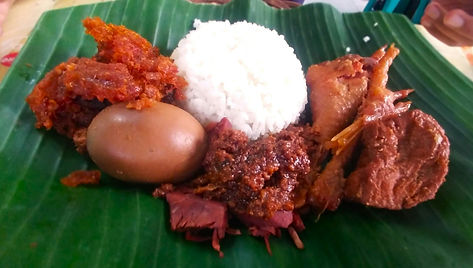
1. Gudeg
- The signature dish of Yogyakarta. It is a sweet and savory stew made from young unripe jackfruit boiled for hours with palm sugar and coconut milk, served with rice, hard-boiled egg, and sambal.
2. Rawon
- A rich, dark beef soup originating from East Java (Surabaya). The broth gets its distinct black color and nutty, earthy flavor from the keluak nut, typically served with rice and bean sprouts.
3. Nasi Goreng & Mie Goreng
- The ubiquitous Indonesian comfort foods. Fried rice or fried noodles cooked in sweet soy sauce (kecap manis), garlic, and chili, often topped with a fried egg and served with prawn crackers.
4. Sate Ayam (Chicken Satay)
- Skewers of marinated chicken grilled over charcoal, smothered in a rich, sweet, and spicy peanut sauce, and served with compressed rice cakes (lontong).
Gudeg
Flights
Flight prices are approximate and vary by departure city, airline, and booking time. Check airlines or travel platforms for the latest details.
* Please note: All prices are rough estimates for orientation purposes only and may vary by region.
Main Airport: Soekarno-Hatta International Airport (CGK) - Jakarta
Flight Prices and Seasons:
From Europe
- Average Round-Trip Cost: €500 to €1,000.
- Cheapest Months: April to June and September to November.
- Peak Prices: December to February (holiday season).
From North America
- Average Round-Trip Cost: $700 to $1,200.
- Cheapest Months: March to May and September to November.
- Peak Prices: Summer and December holidays.
From Asia
- Average Round-Trip Cost: $300 to $600.
- Cheapest Months: February to April and October to November.
- Peak Prices: December holidays and summer months.
From Australia
- Average Round-Trip Cost: $200 to $600.
- Cheapest Months: February to March and September.
- Peak Prices: December holidays and summer months.
From Africa
- Average Round-Trip Cost: $500 to $1,000.
- Cheapest Months: February and September.
- Peak Prices: Summer and December holidays.
-
You can find the best flight deals with Skyscanner or plan the whole vacation, including flights, transportation, hotels and tours with Expedia *
Airport Location
Visa
1. Visa Requirement
- Many travelers, including citizens of the U.S., Canada, the U.K., and Australia, need a visa to enter Indonesia.
2. Visa-Free Entry
- Citizens from several countries can enter visa-free for stays of up to 30 days. This option is not extendable.
3. Visa on Arrival
- Travelers from eligible countries can obtain a Visa on Arrival for 30 days, which can be extended for an additional 30 days.
4. Visa Application
- For longer stays or specific purposes (e.g., work or study), travelers must apply for a regular visa at an Indonesian embassy or consulate before traveling.
5. Processing Time
- Visa on Arrival is issued upon arrival; regular visa processing can take from a few days to several weeks.
6. Duration of Stay
- Visa-free visitors can stay for up to 30 days; Visa on Arrival holders can stay for a total of 60 days (30 days plus 30-day extension).
7. Health Requirements
- No specific vaccinations are required for entry, but Yellow Fever vaccination is necessary if arriving from a Yellow Fever risk country. Travel insurance is recommended.
Important things to know
1. Payments
- The local currency is the Indonesian Rupiah (IDR). Credit cards are accepted in urban areas.
2. Tap Water
- Tap water is generally not safe to drink. Bottled water is recommended.
3. Electricity
- The voltage is 230V, and plug types C and F (two round pins) are used. An adapter may be needed for devices from other regions.
4. Tipping in Restaurants
- Tipping is appreciated, typically around 10% for good service.
5. SIM Cards
- Local SIM cards are available from providers like Telkomsel and XL Axiata. They can be purchased at stores.
6. Driving Side
- In Indonesia, people drive on the left side of the road.
Souveniers
1. Batik Fabric & Clothing
- Batik is a traditional Indonesian textile, hand-dyed with wax-resistant patterns, available as clothing, scarves, or wall hangings.
2. Luwak Coffee (Kopi Luwak)
- One of the world’s rarest and most expensive coffees, made using beans eaten and fermented by civet cats before being collected and roasted.
3. Hand-Carved Wooden Masks
- Balinese and Javanese wooden masks are stunning works of art, often featuring mythological or spiritual themes.
Batik

Location
Reviews
You already visited this country? Share your experiences with others! Tell us what’s worth seeing, what to skip, the things you wish you knew before your trip, what surprised you, what do you wish you knew earlier? Leave a review and help others plan smarter. Thanks in advance! :))