


Country Info | Read more

Flags are sourced from free platforms like flagpedia.net
Ecuador (Andes)
The Andes mountains here are famous for giant volcanoes and historic highland cities. You can wander through the old streets of Quito or shop for colorful blankets at local markets. The cool mountain air and sweeping views make it a beautiful adventure.
* Affiliate links are marked with an asterisk (*). We may earn a commission at no extra cost to you.
Photos without credits are sourced from free platforms like Unsplash and Pexels


Summary
Did you know?
Equator Egg Trick – At the Mitad del Mundo line, tour guides challenge visitors to balance a raw egg on top of a nail, claiming gravity works differently right on the equator.
Overview
Months
June, July, August, September
Vacation type
Mountains, Family, Couple, Rainforest
Expenses
0-50€, <150€, <200€, <100€, Over 200€
Temperature
10-20°C
Rainfall
0-50mm, 50-100mm
Safety
Medium
Continent
South America
Currency
U.S dollar
Languages
Spanish, Kichwa, Shuar
Currency Converter
When to visit
The best time to visit the Ecuadorian Highlands (La Sierra) is during the dry season from June to September. During these summer months, skies are clearest, daytime sunshine is consistent, and mountain visibility is at its peak, making it the premier window for climbing glaciated volcanoes like Cotopaxi and Chimborazo, hiking the Quilotoa Loop, and exploring colonial plazas without heavy rain.
A secondary, brief drier window often occurs from late December through January (locally known as the veranillo del niño).
The wet season runs from October to May, with rainfall peaking between March and April. The Andean highlands experience an "eternal spring" climate year-round where daytime temperatures stay mild (15°C to 21°C / 59°F to 70°F), but rain patterns dictate daily logistics. During the rainy season, mornings often start clear and bright, followed by heavy cloud cover and torrential afternoon downpours or hail storms starting around 1:00 PM or 2:00 PM. Mountain roads can experience mudslides, and trails in high-altitude páramo grasslands become slick and waterlogged.
-
Plan the whole vacation, including flights, transportation, hotels and tours with Expedia *

Climate Data
Peak Season: June to September (Dry Andean Summer)
Average Sunny Hours per Day: 7 to 9 hours.
Rain Frequency: 4 to 8 days per month.
Rainy Hours per Day: 1 to 2 hours.
Intensity: Light, passing mountain showers or brief high-altitude drizzle.
Duration: Predominantly clear, crisp mornings with brisk winds in July and August. Temperatures drop sharply as soon as the sun dips, falling to 5°C to 9°C (41°F to 48°F) at night in the valleys and below freezing on the mountain slopes.
Off-Peak Season: October to May (Rainy Season)
Average Sunny Hours per Day: 4 to 6 hours.
Rain Frequency: 16 to 22 days per month (heaviest in March and April).
Rainy Hours per Day: 2 to 4 hours.
Intensity: Heavy afternoon downpours, occasional lightning, and cold Andean hail storms.
Duration: Rain typically begins in the early afternoon and can linger through dusk, clearing overnight to leave cool, misty mornings.
Climate Chart

Data Source: Global Historical Climatology Network
ClimateCharts.net
Weather, Crowds and Costs
Per one person
Tourist Season: June-September & December-January
Budget Vacation ($25-45/day)
Accommodation: $10-18/night (historic backpacker hostels in Quito’s historic center, guesthouses in Baños, family-run hostals in Otavalo).
Food: $5-10/day (local market almuerzos [set lunches], bowls of locro de papa, empanadas de viento).
Activities: $4-8/day (church entries, free self-guided plaza walking tours, municipal museum tickets).
Transportation: $3-7/day (Quito Metro, city trolleybuses, regional public coach buses).
Other Costs: $2/day (bottled water, fresh Andean fruit juices).
Mid-Range Vacation ($65-145/day)
Accommodation: $35-80/night (restored colonial boutique hotels in Cuenca or Quito, cozy mountain lodges near Cotopaxi with wood-burning fireplaces).
Food: $15-30/day (air-conditioned traditional restaurants, cafe culture dining, craft brewery taprooms).
Activities: $25-55/day (guided volcano day trips, thermal bath passes in Baños, Teleférico cable car rides).
Transportation: $15-30/day (prearranged tourist shuttles, intercity executive vans, Uber/Cabify rides).
Other Costs: $5/day (tips, high-altitude coca tea, laundry).
Luxury Vacation ($220-650+/day)
Accommodation: $150-450+/night (reluxury 5-star heritage hotels like Casa Gangotena in Quito, historic centuries-old working haciendas with horseback riding).
Food: $50-120/day (fine-dining New Andean degustation menus, upscale vineyard dinners, private hacienda dining).
Activities: $80-200+/day (private summit guides for Cotopaxi, bespoke weaving masterclasses in Otavalo, private architectural walking tours).
Transportation: $40-90/day (private air-conditioned vehicle with dedicated driver, domestic flights between Quito and Cuenca).
Other Costs: $25+/day (superfine artisan alpaca blankets, silver jewelry, spa treatments).
Off-Peak Season: October-May
Budget Vacation ($20-35/day)
Accommodation: $8-15/night (discounted hostel dorms, off-season guesthouses).
Food: $5-8/day (local municipal markets, street stalls).
Activities: $3-6/day (indoor colonial churches, museums, thermal pools on rainy afternoons).
Transportation: $3-6/day (public buses and metro rail).
Other Costs: $2/day (hot tea, rain poncho).
Mid-Range Vacation ($45-90/day)
Accommodation: $25-55/night (upgraded hotel rooms and cozy mountain cabins at discounted rates).
Food: $12-22/day (indoor dining, cozy mountain cafes).
Activities: $15-30/day (indoor cooking workshops, museum admissions).
Transportation: $10-20/day (app-based taxis, intercity coach buses).
Other Costs: $4/day (coffee, museum lockers).
Luxury Vacation ($150-320+/day)
Accommodation: $100-240+/night (historic haciendas and luxury heritage hotels offering rainy-season promotions).
Food: $35-75/day (hotel restaurants, gourmet dining).
Activities: $50-100/day (private indoor cultural tours, spa and thermal treatments).
Transportation: $30-65/day (private chauffeured vehicle).
Other Costs: $15/day (artisan goods).
-
You can find accomendations that fit your trip and budget on Booking.com, Vrbo and Hotels.com


Best Regions to visit
Cities
1. Quito
- The high-altitude capital (2,850 meters / 9,350 feet), home to South America's best-preserved and least-altered historic colonial center, set in a dramatic volcanic valley beneath Mount Pichincha.
2. Cuenca (Santa Ana de los Ríos de Cuenca)
- A UNESCO-listed southern colonial jewel renowned for red-tiled roofs, cobbled streets, four rushing rivers, flowery plazas, and intellectual arts culture.
3. Otavalo
- An indigenous market town nestled between volcanic peaks in Imbabura province, globally famous for its vibrant handicraft and textile traditions.
4. Baños de Agua Santa
- The adventure capital of Ecuador, sitting at the lush transition zone where the Andes drop into the Amazon basin, surrounded by hot springs, roaring waterfalls, and the active Tungurahua volcano.
5. Riobamba
- A historic highland railway city encircled by soaring peaks, serving as the primary logistics gateway for expeditions to Mount Chimborazo.
6. Latacunga
- A quiet volcanic plateau city built largely of pumice stone, functioning as the primary base for hiking the Quilotoa Loop and exploring Cotopaxi.
Quito

Did you know?
Active Crater – Cotopaxi is a perfectly symmetrical snow-capped volcano whose peak hides an active, smoking crater you can hike up to.
Islands
1. Teodoro Wolf & Yerovi Islets (Lake Cuicocha)
- Two forested volcanic dome islands rising out of the center of a deep, 3-kilometer-wide water-filled volcanic caldera crater in Imbabura province.
2. Colta Lake Islet
- A small reed-and-willow mound sitting inside Laguna de Colta near Riobamba, home to Andean waterfowl and the historic Balbanera church on the shore.
-
Find the perfect place to stay in any of these top cities and islands with Booking.com, Hotels.com and Vrbo – offering entire homes and apartments for a comfortable and private experience.
Lake Cuicocha

Things to see
Natural Attractions
1. Cotopaxi National Park
- A vast alpine páramo reserve protecting Volcán Cotopaxi (5,897 meters), one of the world's highest active and perfectly symmetrical snow-capped stratovolcanoes.
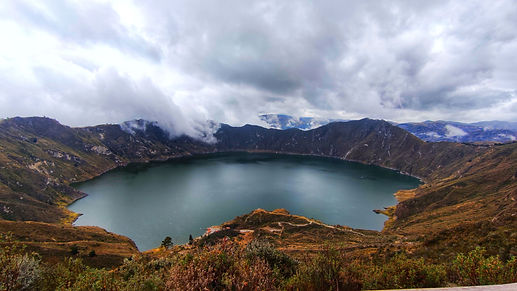
2. Quilotoa Crater Lake
- A breathtaking 3-kilometer-wide emerald-turquoise water caldera formed by a massive volcanic collapse, ringed by rugged jagged rims and hiking paths.
3. Mount Chimborazo
- An extinct stratovolcano whose summit (6,263 meters) is the furthest point from the Earth's center—and the closest point on the Earth's surface to the sun—due to the equatorial bulge.
4. Cajas National Park
- A high-altitude tundra wilderness outside Cuenca characterized by over 200 glacial lakes, polylepis ("paper tree") cloud forests, and wild roaming llamas.
5. Pailón del Diablo (The Devil's Cauldron)
- A massive, deafening waterfall near Baños where the Pastaza River cascades through a sheer rocky chasm, accessible via stone staircases carved directly into the cliff.
Historical and Cultural Sites
1 Historic Center of Quito
- The first city named a UNESCO World Heritage site (along with Krakow in 1978), featuring monumental 16th- and 17th-century Spanish-Moorish architectural treasures like the gold-leaf-covered Church of the Society of Jesus (La Compañía) and the vast Plaza de San Francisco.
2. Ingapirca Archaeological Complex
- The largest and most significant known Inca archaeological site in Ecuador, highlighted by the rare, curved-stone elliptical Temple of the Sun built over an earlier Cañari settlement.
3. Plaza de Ponchos (Otavalo Market)
- One of the largest and most famous indigenous open-air textile and artisan trading markets in the Americas.
4. New Cathedral of Cuenca (Catedral de la Inmaculada Concepción)
- A monumental 19th-century cathedral in Cuenca's Parque Calderón, recognizable by its soaring sky-blue and white Czechoslovakian ceramic domes.
5. Mitad del Mundo (Middle of the World Monument)
- A historical monument north of Quito marking the Equator line surveyed by the 18th-century French Geodesic Mission, paired with the interactive Museo Solar Intiñan.
Unique Experiences
1. Swinging at the "End of the World" (Casa del Árbol)
- Riding a wooden rope swing suspended from a mountain treehouse in Baños, soaring over a canyon directly facing the smoking Tungurahua volcano.
2. Downhill Mountain Biking on Cotopaxi
- Driving up to Cotopaxi’s refuge parking lot at 4,600 meters and descending through the volcanic pumice gravel plains on full-suspension mountain bikes.
3. Balancing an Egg on a Nail at the Equator
- Visiting the Intiñan Museum at latitude 0°0'0" to test equatorial physics demonstrations, including water draining without Coriolis vortexes.
4. Trekking the Rim of Quilotoa Caldera
- Hiking along the high-altitude jagged ridge around the Quilotoa crater, taking in panoramic views of shifting emerald and deep blue water far below.
-
The best way to explore major cities and must-see attractions is by booking guided tours.* They offer convenience, local insights, and often save time when visiting popular sights.
Cotopaxi National Park

Unique Accomondations/Foodspots
Accommodations
Hacienda Zuleta
Location: Imbabura Province, Ecuador Andes
A historic 17th-century working colonial estate nestled high in the Andean mountains, offering elegant antique-filled rooms, horseback riding through dramatic mountain landscapes, and a renowned organic cheese-making facility.
Restaurants / Bars
The Dining Room at Hacienda Zuleta
Location: Hacienda Zuleta, Imbabura Province, Ecuador Andes
An intimate, candlelit dining space inside the historic estate, celebrated for its farm-to-table Andean gastronomy featuring garden-fresh organic vegetables, homemade cheeses, and traditional regional recipes.
Tours to do
1. Cotopaxi Volcano Hike & Downhill Mountain Biking Day Tour
- The quintessential Andean active adventure departing early morning from Quito. Travelers drive along the Pan-American Highway to Cotopaxi National Park, hike from the parking lot (4,600 m) up through red volcanic scree to the José Rivas Refuge (4,864 m), descend to the vehicle, and ride mountain bikes downhill across the volcanic plains down to the shores of Limpiopungo Lagoon.
Duration: Full day (approx. 8 to 9 hours, departs Quito).
Best Time: June to September & December to January.
Average Cost: $50 – $85 per person (includes roundtrip transport, guide, national park entry, mountain bike and helmet gear, and lunch).
2. Quilotoa Emerald Crater Lake Day Tour
- A scenic full-day cultural and hiking tour departing from Quito or Latacunga. The drive winds through the dramatic Toachi River canyon and indigenous highland villages, arriving at the rim of the Quilotoa caldera. Visitors hike down the steep sandy path to the water’s edge to kayak on the sulfurous emerald lake, with the option to hike back up or hire a local mule, finishing with a visit to a Tigua indigenous folk-art workshop.
Duration: Full day (approx. 9 to 11 hours from Quito).
Best Time: June to September.
Average Cost: $45 – $75 per person (includes transport, driver-guide, crater viewpoint fees, and traditional lunch).
3. Otavalo Indigenous Market & Lake Cuicocha Day Tour
- A guided cultural immersion excursion heading north from Quito into the Imbabura province. The tour stops at the solar clock in Guachalá and a local bizcocho pastry bakery in Cayambe, spends several hours exploring the vibrant textile and craft stalls of the Plaza de Ponchos in Otavalo, and concludes with a scenic walk along the rim of the volcanic crater lake of Cuicocha.
Duration: Full day (approx. 8 to 9 hours, departs Quito).
Best Time: Year-round (Saturdays feature the largest market expansion).
Average Cost: $40 – $70 per person (includes roundtrip transport, bilingual cultural guide, and regional tastings).
4. Baños Waterfalls Route & Pailón del Diablo Adventure Tour
- A thrilling day excursion departing from Baños de Agua Santa. Traveling along the "Ruta de las Cascadas" by open-air chiva bus or rental buggy, visitors cross the Pastaza canyon in a metal cable car (tarabita) over the Manto de la Novia waterfall, hike down to the roaring cascades of the Pailón del Diablo to stand behind the falls, and finish with a visit to the Casa del Árbol swing.
Duration: Half-day to Full-day (approx. 5 to 7 hours).
Best Time: Year-round.
Average Cost: $25 – $50 per person (includes local transportation, cable car tickets, and waterfall chasm access).
5. Cajas National Park Glacial Lakes Hiking Tour
- A high-altitude wilderness day trek departing from Cuenca. Led by a certified naturalist guide, hikers trek through the stark, windswept páramo tundra of Cajas National Park, walking past pristine glacial cirques, navigating trails between high alpine lakes, and exploring rare, fairy-tale-like forests of twisted polylepis trees.
Duration: Full day (approx. 6 to 7 hours, departs Cuenca).
Best Time: June to September.
Average Cost: $45 – $80 per person (includes roundtrip transport from Cuenca, guided wilderness hike, park registration, and lunch).
Emerald Crater Lake
How to get around
1. The Pan-American Highway (Troncal de la Sierra / E35)
- The spine of the highlands, also known as the Avenue of the Volcanoes. It is a well-paved, multi-lane highway linking Quito to Latacunga, Ambato, Riobamba, and Cuenca, offering spectacular views of volcanic cones.
2. Quito Metro (Metro de Quito)
- The modern underground subway line running north-south through Quito. It is clean, safe, efficient, and avoids the capital's severe street traffic gridlock, linking the historic center to modern business hubs in minutes.
3. Interprovincial Buses
- Long-distance coach buses (like Transportes Ecuador or Flota Imbabura) run constantly between highland cities from major terminals (Quito’s Quitumbe in the south and Carcelén in the north). They are inexpensive (averaging $1.50 to $2.00 per hour of travel).
4. Ride-Hailing & Taxis
- Uber and Cabify operate smoothly and safely in Quito and Cuenca. In smaller towns like Baños or Otavalo, use licensed yellow taxis equipped with working meters, or agree on the fare prior to getting in.
5. Domestic Flights
- LATAM and Avianca operate frequent, 50-minute domestic flights between Quito (UIO) and Cuenca (CUE), avoiding a 9- to 10-hour overland bus drive through the mountains.
-
You can find great car rental deals for your vacation on Expedia *
Did you know?
Highest Train Zigzag – The Devil's Nose railway climbs sheer cliff faces by backing trains up and down steep zig-zag switchbacks on narrow mountain ledges.
What to eat
1. Ceviche
- Fresh fish marinated in citrus juices, mixed with onions, cilantro, and tomatoes, served with popcorn or plantain chips.
2. Hornado
- Roasted pork served with potatoes, corn, and a side of llapingachos (potato pancakes).
3. Locro de Papa
- A hearty potato soup made with cheese, avocado, and herbs, often enjoyed as a warm dish.
4. Encebollado
- A fish stew made with fresh tuna, yuca, onions, and spices, served with lime and chili for added flavor.
5. Fanesca
- A traditional soup made during Easter, made with a variety of beans, grains, and vegetables, typically served with fried plantains.
Ceviche

Flights
Flight prices are approximate and vary by departure city, airline, and booking time. Check airlines or travel platforms for the latest details.
* Please note: All prices are rough estimates for orientation purposes only and may vary by region.
Main Airport: Mariscal Sucre International Airport (UIO)
Flight Prices and Seasons:
From Europe
- Average Round-Trip Cost: €500 to €900.
- Cheapest Months: March to June and September to November.
- Peak Prices: December to February (holiday season).
From North America
- Average Round-Trip Cost: $300 to $600.
- Cheapest Months: April to June and September to November.
- Peak Prices: December holidays and summer months.
From Asia
- Average Round-Trip Cost: $700 to $1,400.
- Cheapest Months: March and November.
- Peak Prices: December holidays and summer months.
From Australia
- Average Round-Trip Cost: $1,000 to $1,800.
- Cheapest Months: February to March and October.
- Peak Prices: December holidays and summer months.
From Africa
- Average Round-Trip Cost: $600 to $1,200.
- Cheapest Months: February to March and September.
- Peak Prices: Summer and December holidays.
-
You can find the best flight deals with Skyscanner or plan the whole vacation, including flights, transportation, hotels and tours with Expedia *
Airport Location
Visa
1. Visa Requirement
- Most travelers do not need a visa to enter Ecuador for short stays, including citizens of the U.S., Canada, the U.K., and Australia.
2. Visa-Free Entry
- Citizens from several countries can enter visa-free for stays of up to 90 days.
3. Visa Application
- Travelers from countries that require a visa must apply for an Ecuadorian visa at an Ecuadorian embassy or consulate before traveling.
4. Types of Visa
- Commonly issued as tourist visas, typically valid for stays of up to 90 days, with the option to extend.
5. Processing Time
- Visa processing can take from a few days to a few weeks, so it's advisable to apply well in advance.
6. Duration of Stay
- Most visa-free visitors can stay for up to 90 days; visa holders typically have the same duration.
7. Health Requirements
- No specific vaccinations are required for entry, but having travel insurance is recommended.
Important things to know
1. Payments
- The local currency is the United States Dollar (USD). Credit cards are widely accepted in urban areas.
2. Tap Water
- Tap water is generally not safe to drink. Bottled water is recommended.
3. Electricity
- The voltage is 120V, and plug types A and B (two flat pins) are used. No adapter is needed for devices from North America.
4. Tipping in Restaurants
- Tipping is customary, with 10-15% being standard for good service.
5. SIM Cards
- Local SIM cards are available from providers like Claro and Movistar. They can be purchased at stores.
6. Driving Side
- In Ecuador, people drive on the right side of the road.
Souveniers
1. Panama Hat
- Despite its name, the Panama hat originated in Ecuador. These lightweight, handwoven straw hats are stylish and perfect for warm weather.
2. Chocolate Bars Made from Ecuadorian Cacao
- Ecuador is known for producing some of the best cacao beans in the world, resulting in high-quality dark chocolate with floral and fruity notes.
3. Tagua Nut Carvings
- Also called “vegetable ivory,” tagua nuts are carved into intricate figurines, jewelry, and decorative pieces.
Panama Hat

Location
Reviews
You already visited this country? Share your experiences with others! Tell us what’s worth seeing, what to skip, the things you wish you knew before your trip, what surprised you, what do you wish you knew earlier? Leave a review and help others plan smarter. Thanks in advance! :))